What Do Blind and Visually Impaired People Actually See?
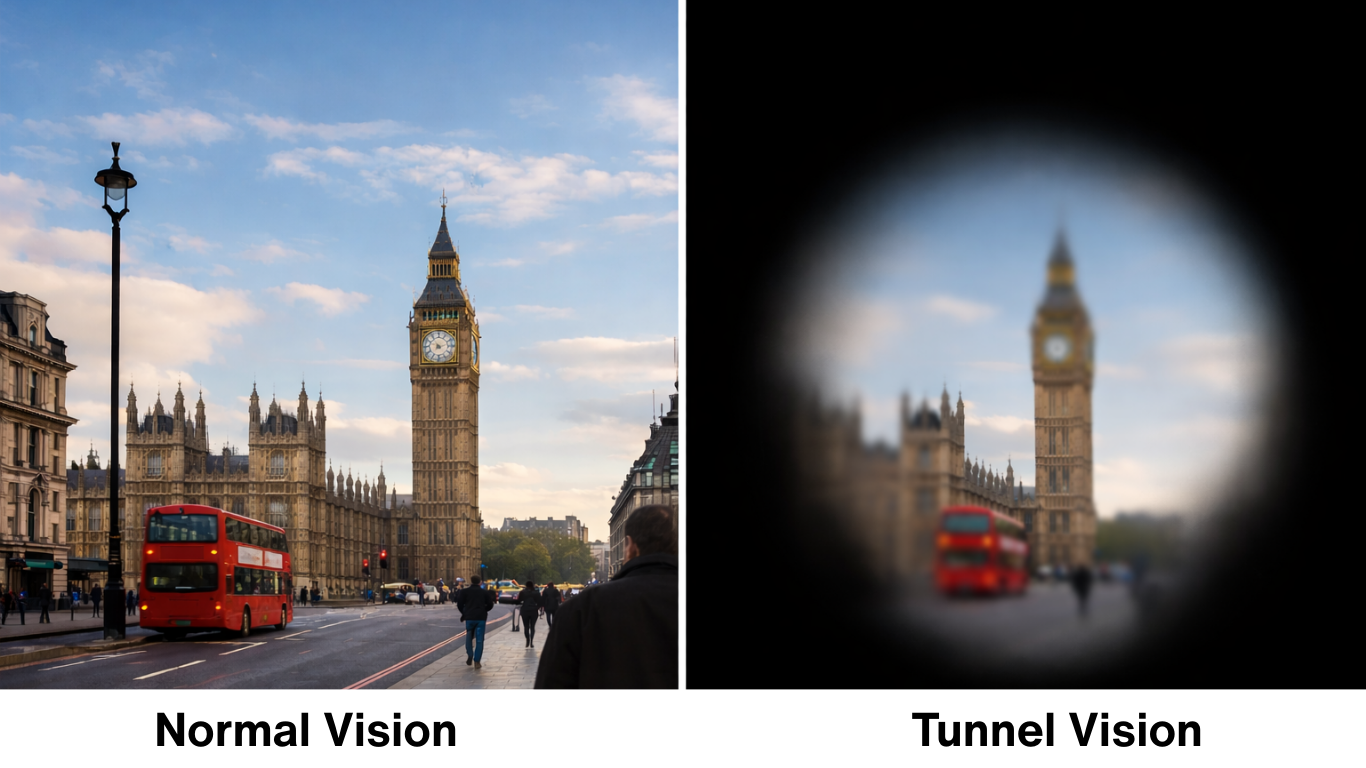
Many people assume that blindness means seeing complete darkness. But the reality is far more complex.
Blindness and visual impairment exist on a spectrum. Some blind people see light, shapes, or blurry colours. Others may have very limited vision such as tunnel vision or patches of missing sight.
In the UK, more than 2 million people are living with sight loss, and this number is expected to grow as the population ages.
Only a small percentage of people experience total blindness with no light perception at all
Understanding what blind and visually impaired people actually see helps break common misconceptions about sight loss. In this guide, we explain the different ways vision loss affects how people perceive the world, the conditions that cause it, and why blindness does not mean the same experience for everyone.
Short Answer: What Do Blind People See?
Blind and Visually Impaired People (VIPs) may experience many different types of vision depending on their condition. Some people see nothing at all, while others may see light, blurry shapes, colours, or shadows.
In fact, most people with visual impairment still retain some level of vision rather than experiencing total darkness. What someone sees depends on the cause of their sight loss, how severe it is, and whether they were born blind or lost vision later in life.
Blindness Is a Spectrum, Not Just Total Darkness
When people search “what do blind people see,” they often imagine complete blackness. However, blindness is rarely that simple.
Vision loss exists on a spectrum that ranges from mild visual impairment to total blindness.
Some people may experience:
- Blurred or distorted vision
- Missing areas of sight
- Tunnel vision
- Extreme sensitivity to light
- Difficulty seeing in low light
- Light perception without clear images
Because of this range, two people who are both described as “blind” may experience the world visually in completely different ways.
According to the Royal National Institute of Blind People (RNIB), people experience sight loss in many different ways depending on their condition.
Do Blind People See Black?
One of the most common questions people ask is: Do blind people see black?
Surprisingly, the answer is usually no.
Black is still something you see with your eyes. It is a visual colour. People who are completely blind with no light perception generally do not experience blackness. Instead, they simply do not receive visual information from their eyes.
A helpful comparison is to think about what your elbow sees. Your elbow does not see darkness, it simply does not process visual information at all.
This is similar to how total blindness works.
What Do Partially Blind or Low Vision People See?
Most people with visual impairment are not completely blind. Instead, they have what is called low vision or partial sight.
This means they still have some usable vision, although it may be limited or distorted.
Common experiences include:

Blurry Vision
Objects may appear fuzzy or out of focus, even with glasses. Reading text or recognising faces can be difficult.
Tunnel Vision
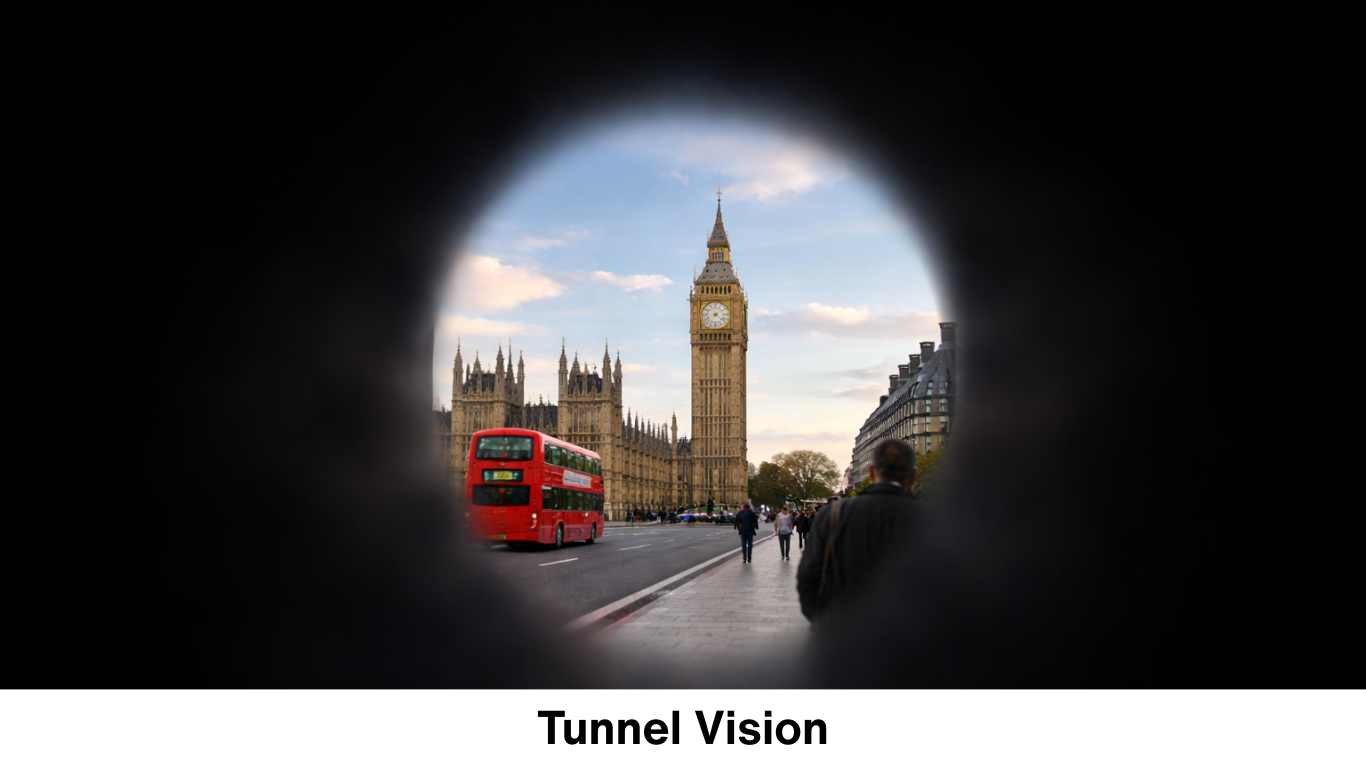
People with tunnel vision can only see the centre of their visual field. Everything around the edges disappears.
This is common in conditions such as glaucoma.
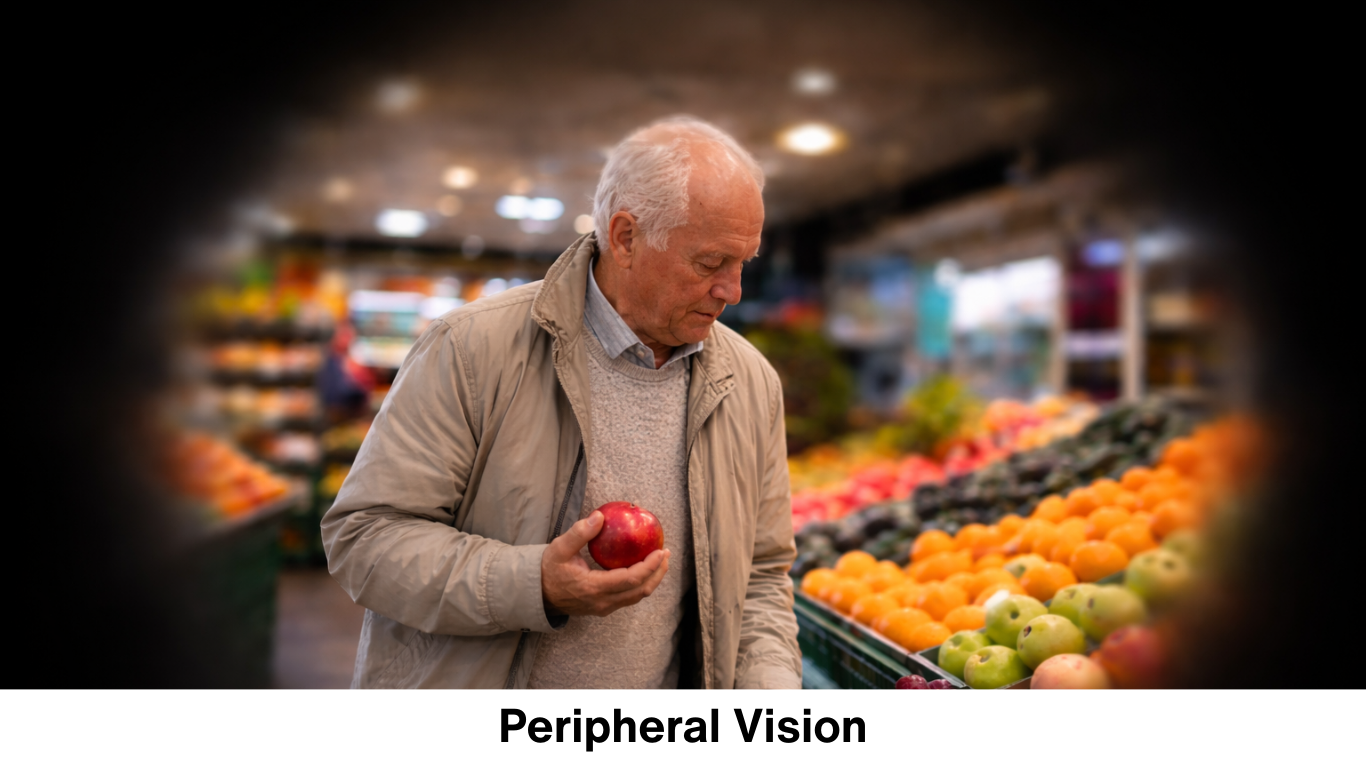
Peripheral Vision Loss
Some people lose side vision but still see clearly in the centre.
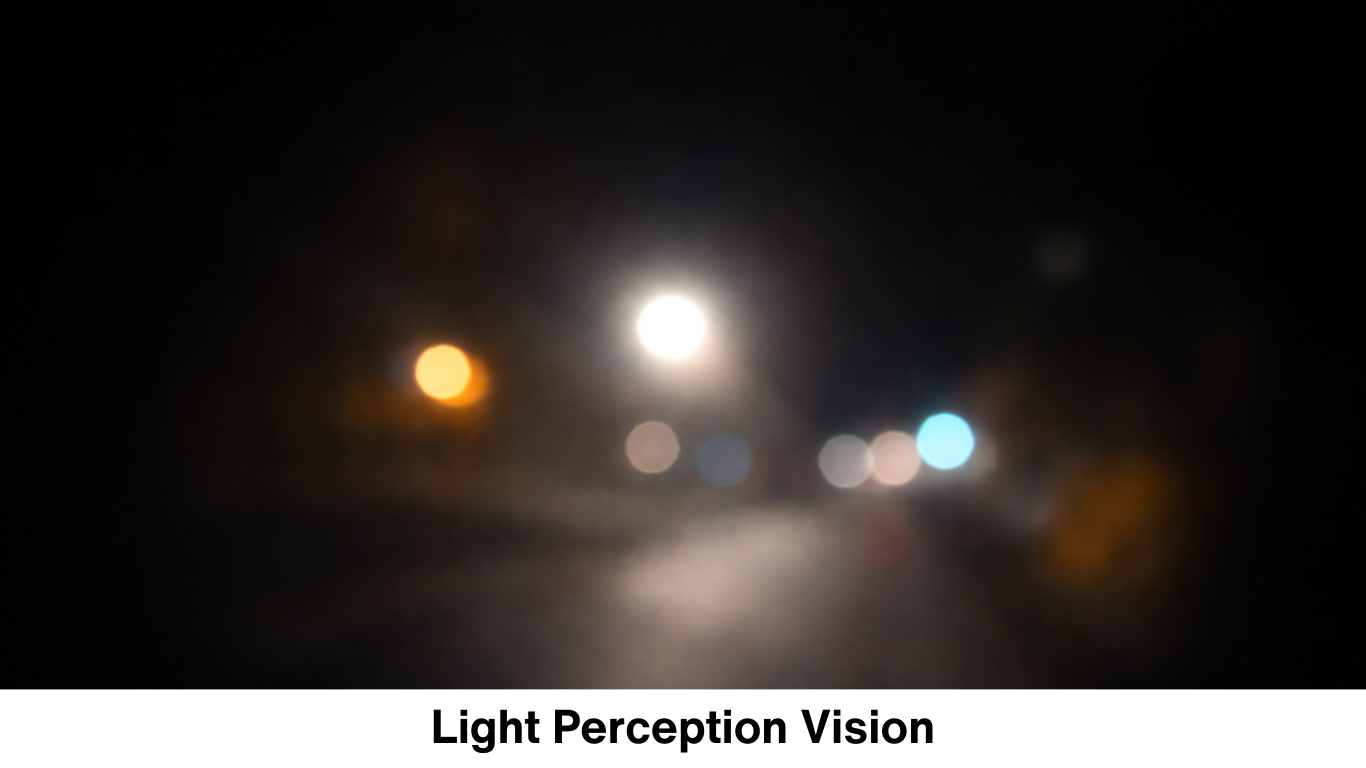
Light Perception
Certain individuals with severe sight loss can detect light sources. They may know whether a room is bright or dark, or where sunlight is coming from.
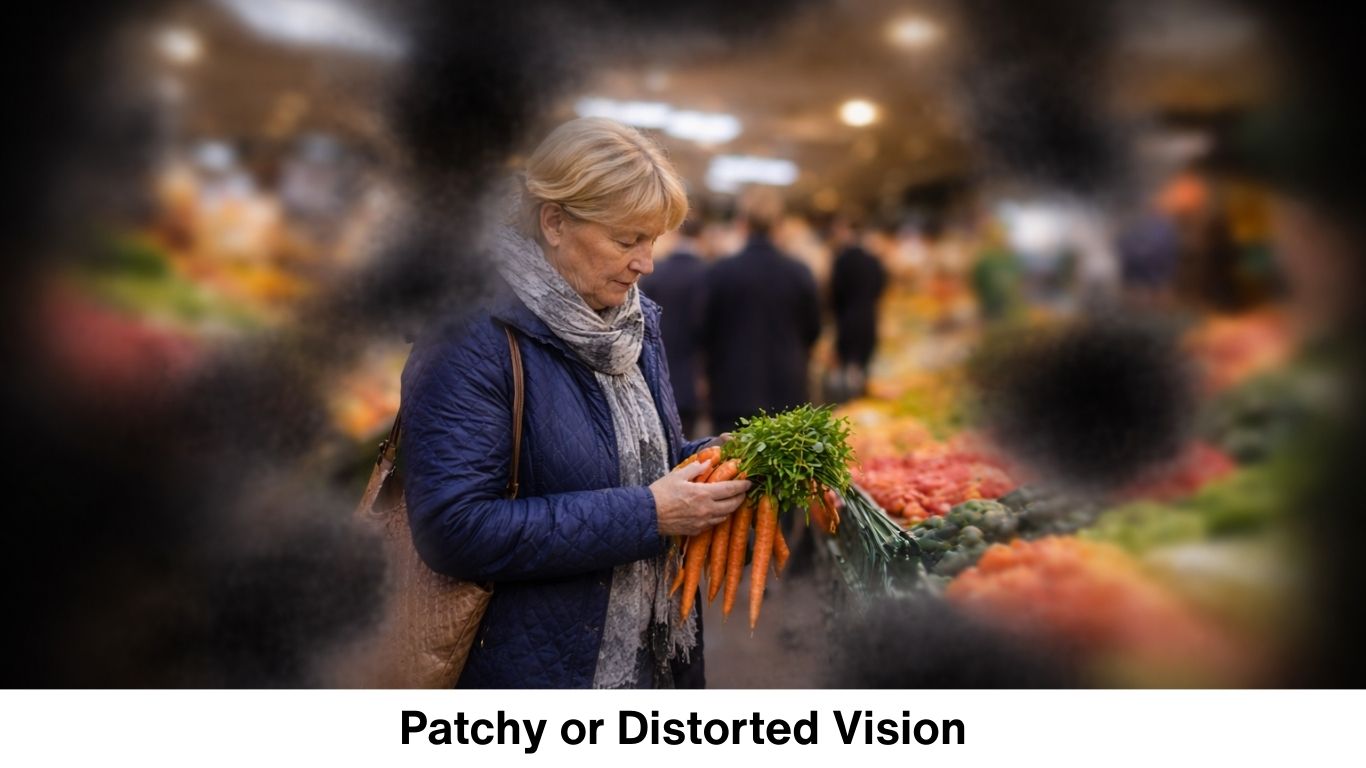
Some eye conditions create blind spots or areas where vision disappears.
Because these experiences vary widely, asking “what do partially blind people see” does not have a single answer.
Different Types of Vision Loss
To understand what blindness looks like, it helps to know the different categories of vision loss.
Total Blindness
Total blindness means there is no light perception at all. The eyes cannot detect light or visual images.
This form of blindness is relatively rare.
Legal Blindness
Legal blindness is a medical classification used in many countries. It usually refers to vision that is 20/200 or worse.
In the UK, people with severe sight loss can be registered as “Sight Impaired” or “Severely Sight Impaired.” This registration helps individuals access support, benefits, and accessibility services.
People who are legally blind may still have some usable vision.
Low Vision
Low vision describes partial vision that cannot be fully corrected with glasses or contact lenses. Many people with low vision still use their remaining sight for everyday tasks.
Night Blindness
Night blindness means difficulty seeing in low-light environments, such as at night or in dimly lit rooms.
Each of these forms of sight loss affects what a person sees in different ways.
What Do Different Eye Conditions Look Like?
Different eye conditions affect vision in different ways. Understanding these conditions can help explain what blind or visually impaired people may see.
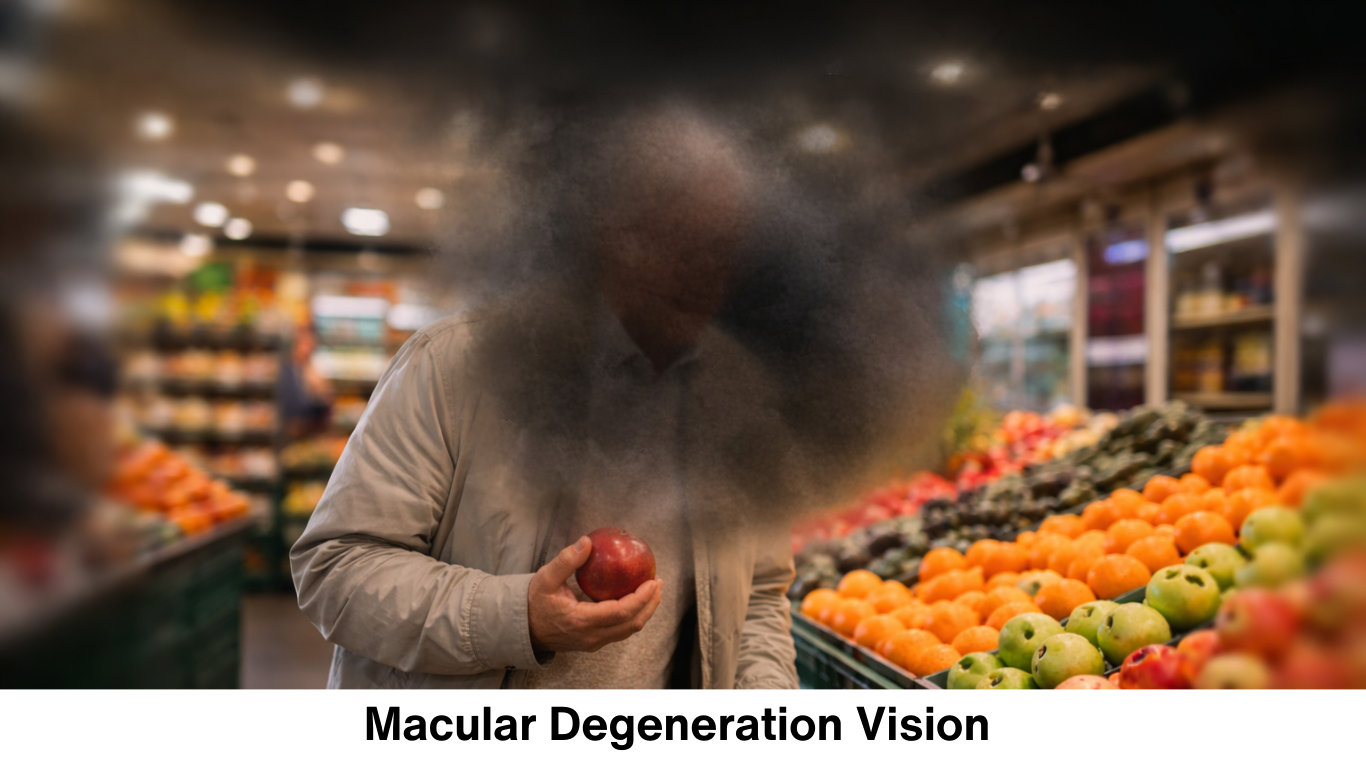
Macular Degeneration
Age-related macular degeneration affects central vision. People may see a blurry or dark spot in the centre of their sight while the edges remain clearer.
This can make reading or recognising faces difficult.
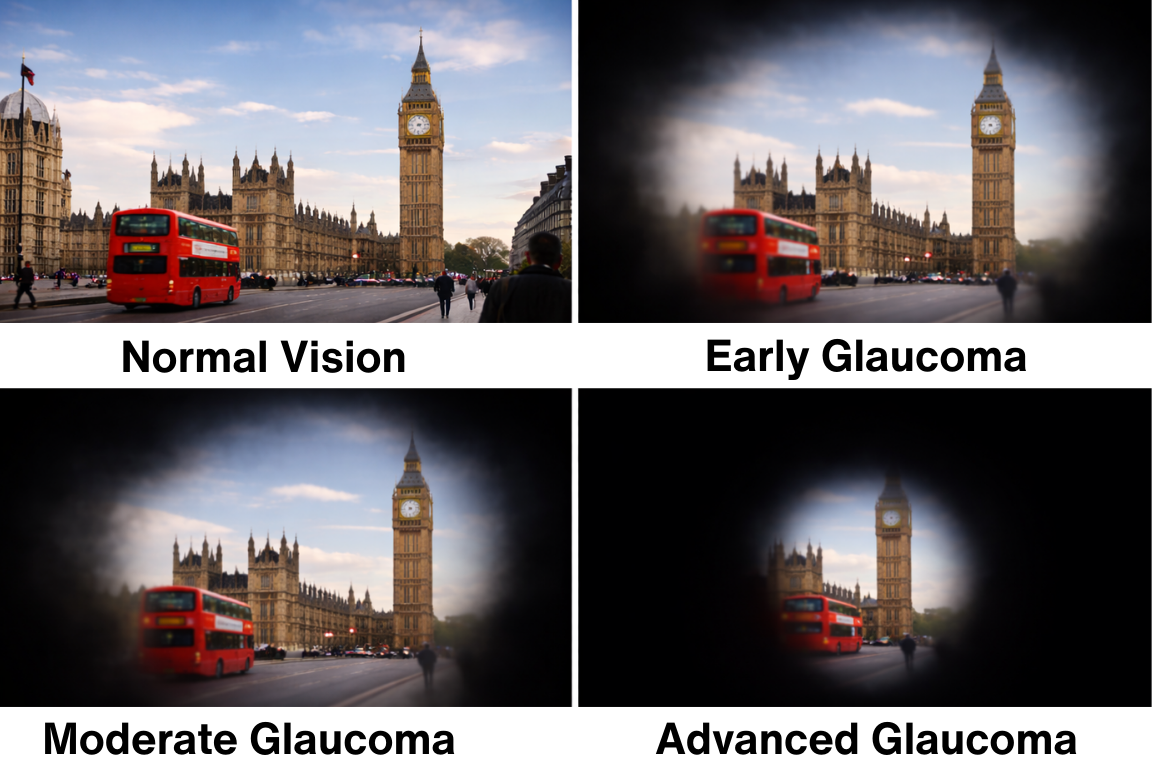
Glaucoma
Glaucoma often causes tunnel vision. Over time, peripheral vision slowly disappears, leaving only a small central field of view.

Cataracts
Cataracts cause the lens of the eye to become cloudy. Vision may appear blurry, hazy, or washed out.
Colours may also look faded.

Diabetic Retinopathy
This condition can cause dark spots, floating shapes, or distorted areas in vision.
These visual changes vary greatly depending on the stage of the disease.
Can Blind People See Light or Shapes?
Many blind people can still perceive light or shapes.
This ability is called light perception.
Someone with light perception may be able to:
- Detect whether a room is bright or dark
- Notice flashes of light
- Tell where sunlight is coming from
- Identify large shapes or movement
Even though this vision may not be detailed, it can still help with orientation and navigation.
How Blind People Perceive the World Without Sight
Vision is only one way humans understand their surroundings.
People with blindness often rely more heavily on other senses to interpret the world.
These may include:
Hearing
Sounds provide information about distance, movement, and location.
Touch
Through touch, people can identify objects, read Braille, and explore environments.
Memory and Spatial Awareness
Many VIPs (Visually Impaired People) build mental maps of spaces based on repeated travel.
Echolocation
Some individuals use sound reflections, such as tapping a cane or making clicks, to understand nearby objects and obstacles.
The brain is remarkably adaptable and can process information from multiple senses to build an understanding of the environment.
What Do Blind People See in Their Dreams?
Dreams are produced by the brain rather than the eyes.
People who lose vision later in life often continue to experience visual images in their dreams because their brain remembers past visual experiences.
People who are born blind usually do not dream visually. Instead, their dreams are often based on:
- Sounds
- Touch
- Movement
- Emotions
- Conversations
Dream experiences vary widely depending on the individual.
Common Myths About Blindness
There are many misconceptions about blindness.
Myth: Blind People See Complete Darkness
Reality: Many people with visual impairment still have some level of vision.
Myth: Blind People Have Superhuman Hearing
Reality: Hearing does not magically improve. However, blind individuals may rely on it more heavily.
Myth: All Blind People Use Guide Dogs
Reality: Many people use white canes or other tools instead.
Understanding these myths helps create a more accurate picture of what living with sight loss is actually like.
How Visually Impaired People Navigate the World
People with sight loss use many tools and techniques to navigate everyday environments.
These include:
- White canes for detecting obstacles
- Guide dogs trained to assist with mobility
- Smartphone accessibility features such as screen readers
- Audio navigation apps
- Public transport assistance services
- Community services such as Travel Hands, which connect Visually Impaired People (VIPs) with trained volunteer guides to support walking journeys across London
These tools allow many visually impaired people to travel independently, work, and participate fully in society.
You can also learn more about how blind and visually impaired people travel independently in London.
Final Thoughts
So, what do blind and visually impaired people actually see?
The answer is different for every individual.
Some people experience blurry or distorted vision. Others may see light or shadows. A smaller number of people experience total blindness with no light perception.
Blindness is not a single experience. It is a range of conditions that affect vision in different ways.
Understanding these differences helps break stereotypes and encourages a more inclusive world for people with sight loss.
Be a part of

