Can Blind and Visually Impaired People Travel Independently in London?
The Most Complete 2026 Guide to Support, Safety, Benefits, and Real-Life Travel

Travelling in London is challenging even for sighted people.
For blind and visually impaired people or VIP as we fondly refer, it can be overwhelming, risky, and exhausting but it can also be empowering and independent, with the right support.
This guide answers every major question people ask about:
- Independent travel
- Safety
- Free travel
- Disability benefits
- Real barriers
- What actually helps in everyday London life
It is written for:
- Visually impaired people
- Families and carers
- Volunteers and supporters
- Organisations and funders
First, a Clear Answer

Yes, blind and visually impaired people can travel independently in London.
But independence is not automatic, not constant, and not the same for everyone.
Independence depends on:
- Confidence
- Familiarity
- Support
- Environment
- Energy levels
- Time of day
This guide explains what that really means.
What “Independent Travel” Means in Real Life
Independent travel does not mean:
- Never asking for help
- Doing every journey alone
- Being fearless or perfect
For most VIPs in London, independence means:
- Choosing when to travel
- Knowing support exists if needed
- Being confident enough to leave the house
- Feeling safe, not rushed or pressured
Independence is about choice and control, not isolation.
What Helps VIPs or Blind People Travel in London
.jpg)
Many blind and VIPs (visually impaired people) do travel confidently, especially on familiar routes.
Common supports include:
- White cane or guide dog
- Familiar routes and landmarks
- Audio announcements on buses and trains
- Tactile paving at crossings and platforms
- Support from transport staff (when available)
London has improved accessibility, but support works best when systems and people work together.
Where London Is Still Difficult
Despite progress, London still presents serious challenges.
Common barriers include:
- Busy stations with unclear layouts
- Sudden platform or route changes
- Quiet or unclear announcements
- Crowded pavements and obstacles
- Missed stops during peak hours
- Staff not noticing non-visible disabilities
Even small changes can completely disrupt a journey.
Is London Safe for Blind People to Travel Alone?
Sometimes — but not always.
Safety depends on:
- Familiarity with the route
- Crowd levels
- Time of day
- Confidence and experience
- Whether help is available
Many VIPs (visually impaired people) avoid:
- Peak travel times
- Unfamiliar stations
- Large interchanges
Not because they can’t , but because the risk and stress are too high.
The Emotional Reality of Independent Travel
This part is rarely talked about, but it matters.
Many blind people experience:
- Anxiety before leaving home
- Fear of getting lost
- Embarrassment after a mistake
- Mental fatigue from constant focus
- Reduced confidence after one bad journey
One difficult trip can undo weeks of progress.
Does Free Travel Automatically Mean Independence?
No.
In London, VIPs are entitled to free public transport through schemes supported by Transport for London, including the Freedom Pass.
Free travel removes cost, but it does not remove:
- Risk
- Fear
- Disorientation
- Isolation
Accessibility is not just about tickets.
It’s about being able to use the system confidently.
What Financial Support Is Available in London?
There is no single “blindness benefit”.
Support is based on how sight loss affects daily life and is managed by the Department for Work and Pensions.
Main benefits include:
- Personal Independence Payment (PIP) (working age)
- Attendance Allowance (pension age)
- Universal Credit (LCWRA element)
Some visually impaired people may receive:
- Up to ~£183 per week in PIP
- Council tax reduction
- Additional local support
Benefits help, but they do not replace human support or confidence.
Do Blind People Need to Be Registered to Get Help?
Not always. Being registered as:
- Sight Impaired, or
- Severely Sight Impaired
can make applications easier, but:
- Benefits are based on impact, not diagnosis
- Some support accepts medical evidence instead
Can Blind People Travel Completely Alone?
Sometimes, yes.
Always, no.
Many visually impaired people:
- Travel alone on familiar routes
- Use support on new or complex journeys
- Adjust day by day based on confidence
This flexibility is what real independence looks like.
What Helps Build Travel Confidence?
Confidence grows when:
- Routes are practised with support
- Mistakes happen safely
- Someone is there during unfamiliar journeys
- There’s no pressure to “manage alone”
Support builds independence, it does not remove it.
How Human Support Makes the Difference
Infrastructure alone cannot solve everything.
Human support provides:
- Reassurance
- Orientation
- Confidence
- Emotional safety
Community-based support services like Travel Hands help visually impaired people navigate London by pairing them with trained volunteer guides for accompanied journeys.
This approach:
- Reduces isolation
- Builds confidence
- Enables real independence over time
Is Needing Help a Step Backwards?
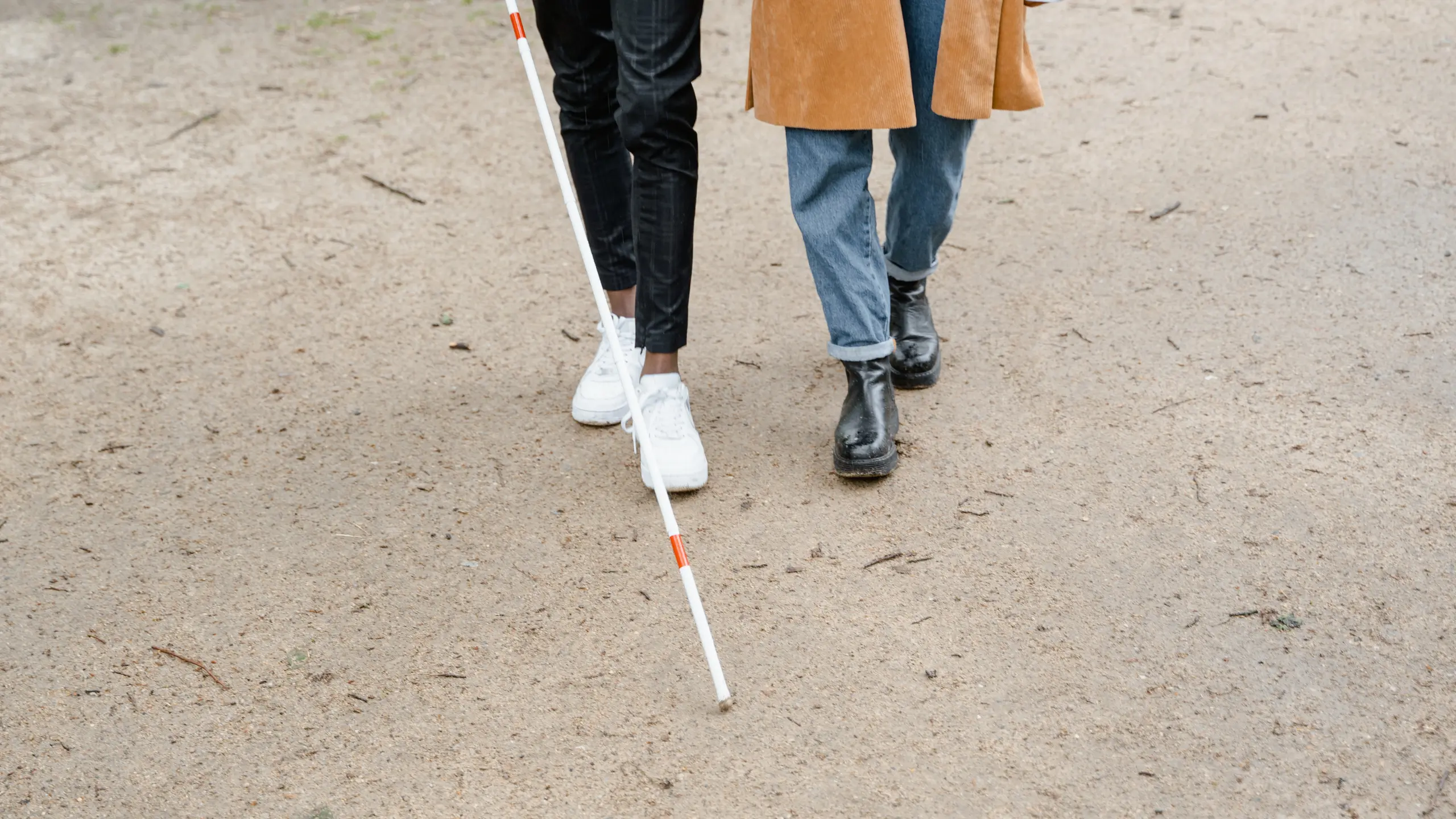
No.
Needing help is:
- Normal
- Situational
- Human
True accessibility means:
- Help is available when needed
- Choice is respected
- No one is judged for asking
Support is not weakness.
Options are freedom.
Blind and visually impaired people can travel independently in London, but independence is supported, flexible, and personal.
True accessibility comes from:
- Inclusive design
- Clear information
- Human support
- Respect for individual needs
A city is accessible when people can choose how they travel, not when they’re forced to manage alone.
If you want to support confident, safer journeys for visually impaired people in London, learn more about volunteering as a Travel Hands Guide and helping someone move through the city with confidence.
Be a part of

