VIP Ambassador Programme: Giving Back to the Community That Built Travel Hands
A number that hasn't budged since 1991
There's a statistic in the sight loss sector that ought to stop people in their tracks, and mostly doesn't.
The employment rate for blind and partially sighted people of working age in the UK is around 27 per cent. For the general population it's 76 per cent. For disabled people who aren't living with sight loss, it's 51 per cent.
But the figure that matters most isn't the gap, it's the timeline. According to survey's analysis, the employment rate for blind and partially sighted people is the same today as it was in 1991. Three and a half decades. Screen readers arrived. Smartphones arrived. The Equality Act arrived. The number didn't move.
When survey asked blind and partially sighted people what was actually stopping them, the answers weren't about capability. They were about employers: inaccessible recruitment processes, poor employer attitudes, and a lack of support once in post. Nearly a quarter of employers surveyed said outright that they wouldn't be willing to make adaptations to employ a blind or partially sighted person.
So the barrier isn't blind people. It's how jobs are designed.
What we're launching in London
Today we're opening applications for the Travel Hands VIP Ambassador Programme paid work for blind and partially sighted Londoners who will coordinate and lead our community activities across the capital.
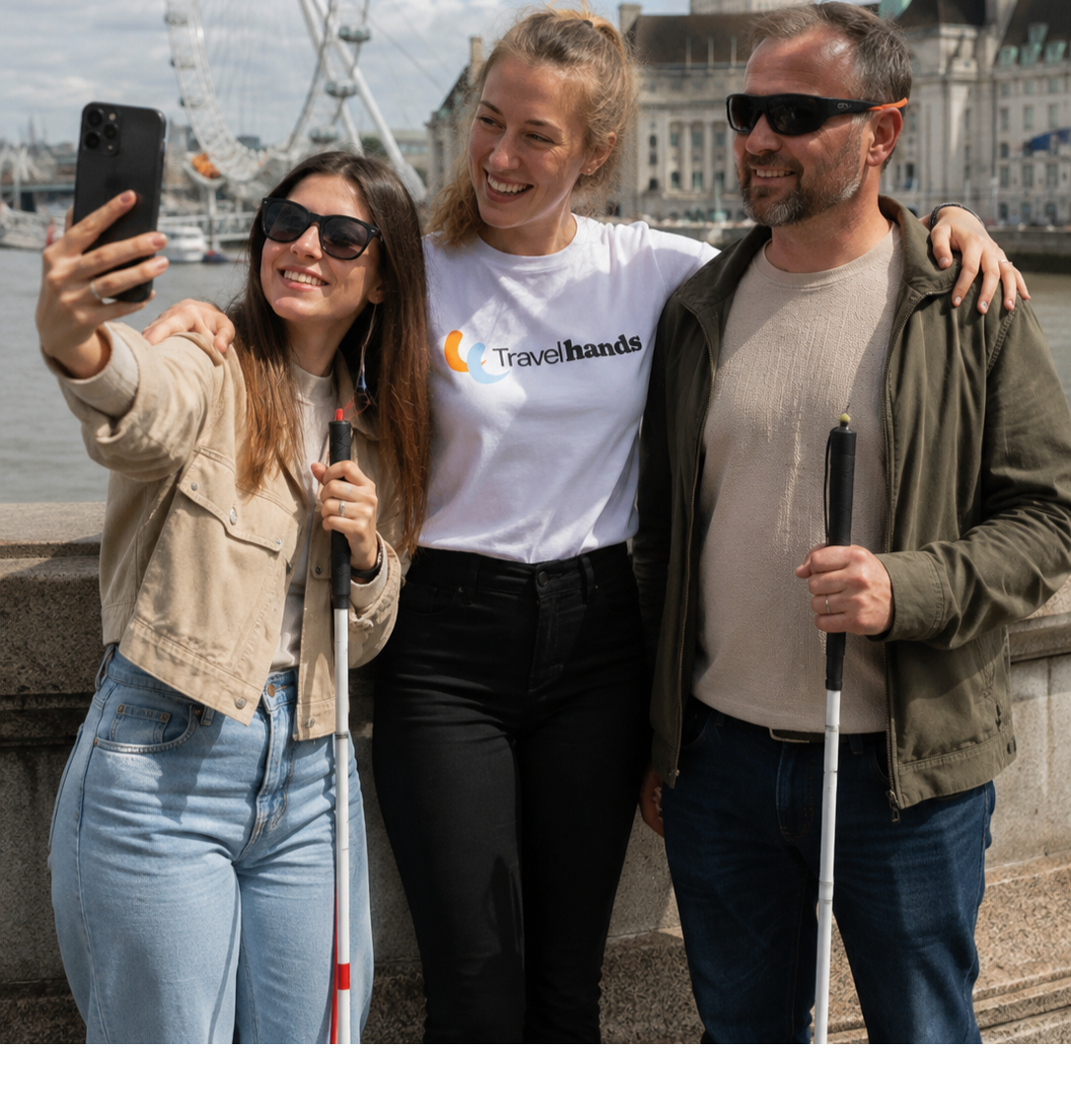
Travel Hands is a London sight loss charity that matches blind and partially sighted people who we fondly call VIPs, standing as an acronym for Visually Impaired People, with trained volunteer sighted guides for journeys across the city. We've supported more than 1,700 journeys since launch, from hospital appointments in east London to social events in the south. Every one of those journeys taught us something, and almost all of it came from our VIPs rather than from us.
VIP Ambassadors are the next step. They aren't a focus group. They aren't a lived experience panel. They're paid members of the team, with real responsibility for delivery.
What a VIP Ambassador does
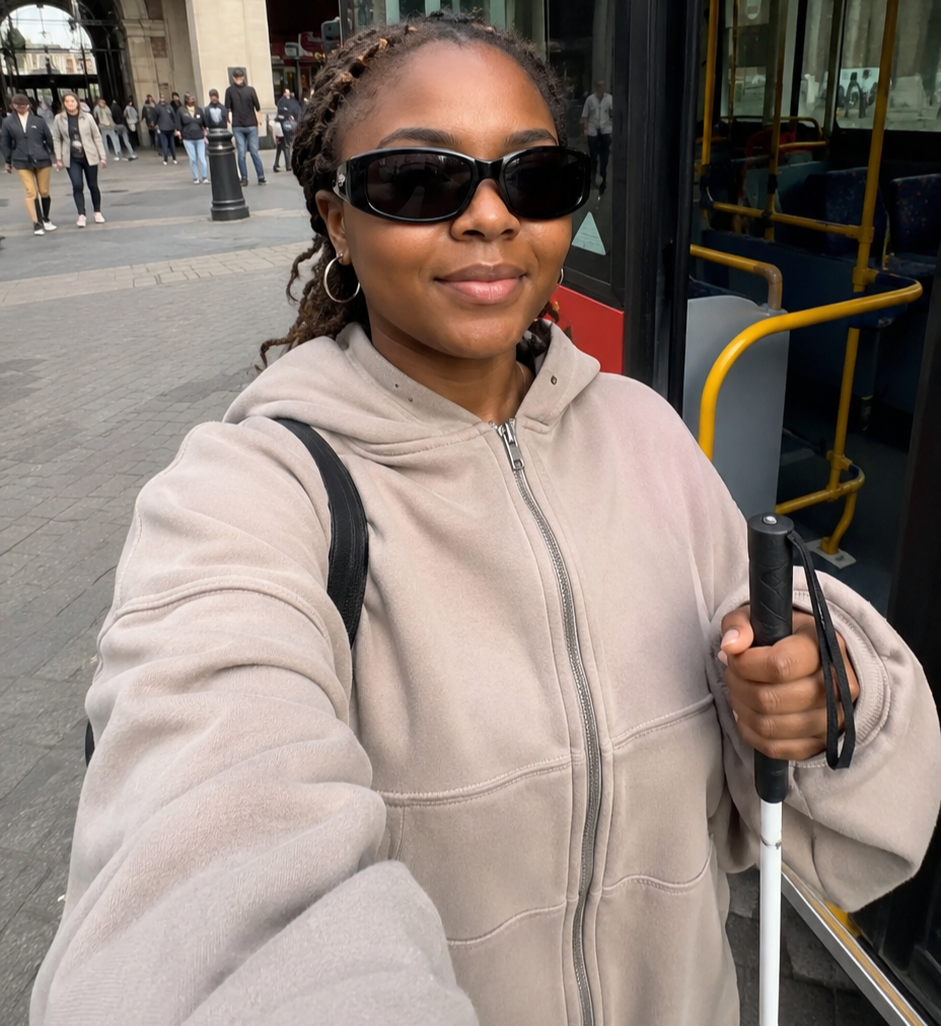
Run the activity. Each Ambassador takes an assigned activity from planning through to completion guided walks, volunteer training sessions, in-person socials and community events across London. They're the key point of contact, coordinating with the partner organisation, keeping volunteers and VIP participants informed, and making sure the session runs properly from start to finish.
Trains new sighted guides. Ambassadors take part in training walks, helping new volunteers understand what being a sighted guide actually involves and build genuine confidence supporting blind and partially sighted people. There's no substitute for learning this from the person you'll be guiding.
Hold the relationships. Building connections with volunteers, London sight loss organisations and the wider community, and being the recognisable face of Travel Hands in the room.
Shapes our content. Our marketing team writes the scripts and captions. Ambassadors bring the voice, the story, and the final sign-off. Nothing goes out without their approval.
Build the evidence. Ambassadors help gather what the sector doesn't yet know about life with sight loss in London, how people react to visual impairment, what they assume, what they ask. Light, casual, and always with the questions shared in advance.
What Ambassadors get
- Paid work, agreed individually with each Ambassador before any activity begins, based on the responsibilities they take on
- Priority matching on their own Travel Hands journeys
- Opportunities to be featured in our content and share their story, credited by name whenever they want it
- Familiarisation and ongoing support from the team
Why paid, and why that word matters
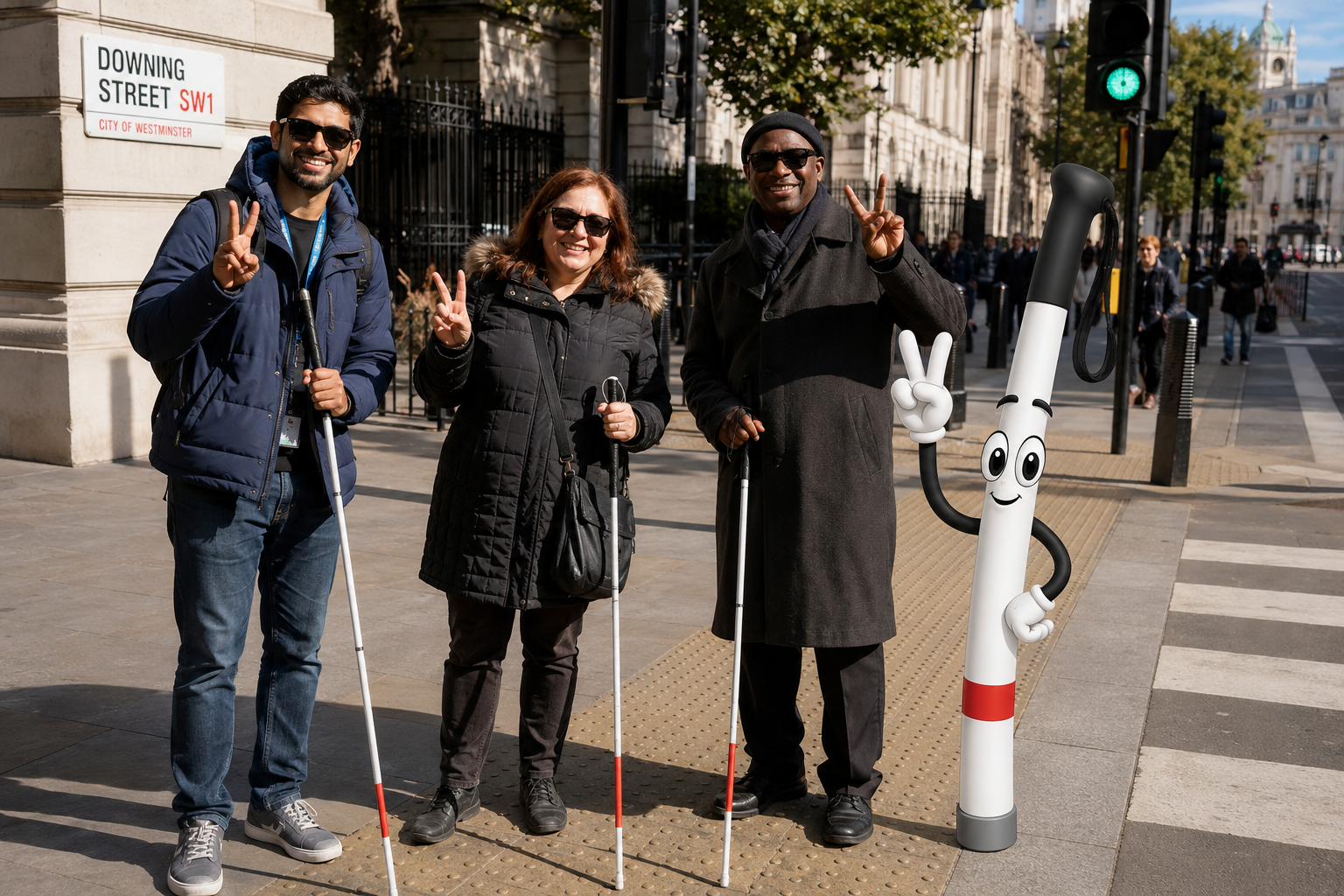
The charity sector is full of the language of co-production. Consultation groups. Advisory boards. Lived experience panels. Much of it is well meant, and a great deal of it is unpaid.
There's a particular contradiction in an organisation that exists to widen opportunity for blind people while asking blind people to contribute their time, expertise and personal story for free. Insight is work. Coordination is work. Leading a session in an unfamiliar London venue with all the additional planning an unfamiliar journey requires is work.
So we've done the obvious thing and put a budget behind it. Pay is agreed with each Ambassador individually, in advance, and scaled to what they actually take on because the roles genuinely differ. Somebody coordinating a full afternoon event across three boroughs isn't doing the same job as somebody leading one training walk near home.
We've also tried to design the role around the barriers surveys identified rather than pretending they don't exist:
- Every brief, script and set of questions arrives in advance. Nobody gets put on the spot.
- Communication runs on email, WhatsApp and voice notes tools people already use, not a bespoke platform nobody can navigate.
- Materials are accessible by default, not accessible on request.
- Flexible commitment, scaled to the sessions each Ambassador takes on.
If inaccessible recruitment is one of the biggest reported barriers to employment for VIPs, then the application process is the first place a charity should be judged. We'd rather be judged on it than write about it.
Why this is really about companionship
Employment is one half of the picture. Isolation is the other, and the two are connected.
A Fight for Sight survey in 2019 found that 80 per cent of blind and partially sighted people reported being sometimes, often or always lonely, driven not by sight loss alone but by the barriers around it, including access to transport, employment and technology. The same research found that 80 per cent said they'd feel less lonely if they could take part in physical activity and sport.
The effects of social isolation on older adults are well documented, and sight loss makes them sharper. Most people who lose their sight in the UK do so later in life, at exactly the point when a shrinking social circle is hardest to rebuild. The signs are quiet ones: invitations declined, hobbies dropped, a week where nobody calls. Companionship for older Londoners living with sight loss isn't a nice extra; it's the thing that keeps the rest of life reachable.
This is why Travel Hands has never described itself as a transport service. Volunteer sighted guides provide company as much as navigation. On the walk to the station somebody talks about their week. That conversation is often the point of the journey, and the destination is the excuse.
Paying Ambassadors to lead this work follows the same logic. The person who understands what isolation after sight loss actually feels like is the person who should be designing the response to it.
We're delighted to be working with:
- Metro Blind Sport is a pan-London charity running sport and social activities for blind and partially sighted people of all ages and abilities, from athletics and bowls to cricket, football, tennis and walking. Metro has been opening doors to sport across the capital since 1973.
- Beyond Sight Loss is supporting blind and partially sighted people to live independently and stay connected to their community in Tower Hamlets or East London.
- Croydon Vision has been supporting blind and partially sighted people across Croydon since 1923, with advice, advocacy, tech training, transport support and social activities from their base on Wellesley Road.
Who we're looking for
- A regular Travel Hands user based in London, familiar with the VIP experience and interested in improving accessibility, independence and community connection for others
- Responsible and organised
- Comfortable communicating clearly and confidently with charities, volunteers, participants and the Travel Hands team
- Confident using email, WhatsApp and basic online tools
- Happy to record short videos, voice notes or informal updates when needed
- Reliable and flexible, able to attend agreed sessions across London and take responsibility for assigned activities
You don't need a communications background. You don't need to have done anything like this before. You need to know what the journey is actually like.
Get involved
If you're a blind or partially sighted Londoner interested in becoming a VIP Ambassador, get in touch and we'll walk you through it.
If you want to volunteer as a sighted guide in London, you don't need experience or a qualification. We train you, and you'll be guided by the people who know the journey best. Become a Travel Hands volunteer →
Frequently asked questions
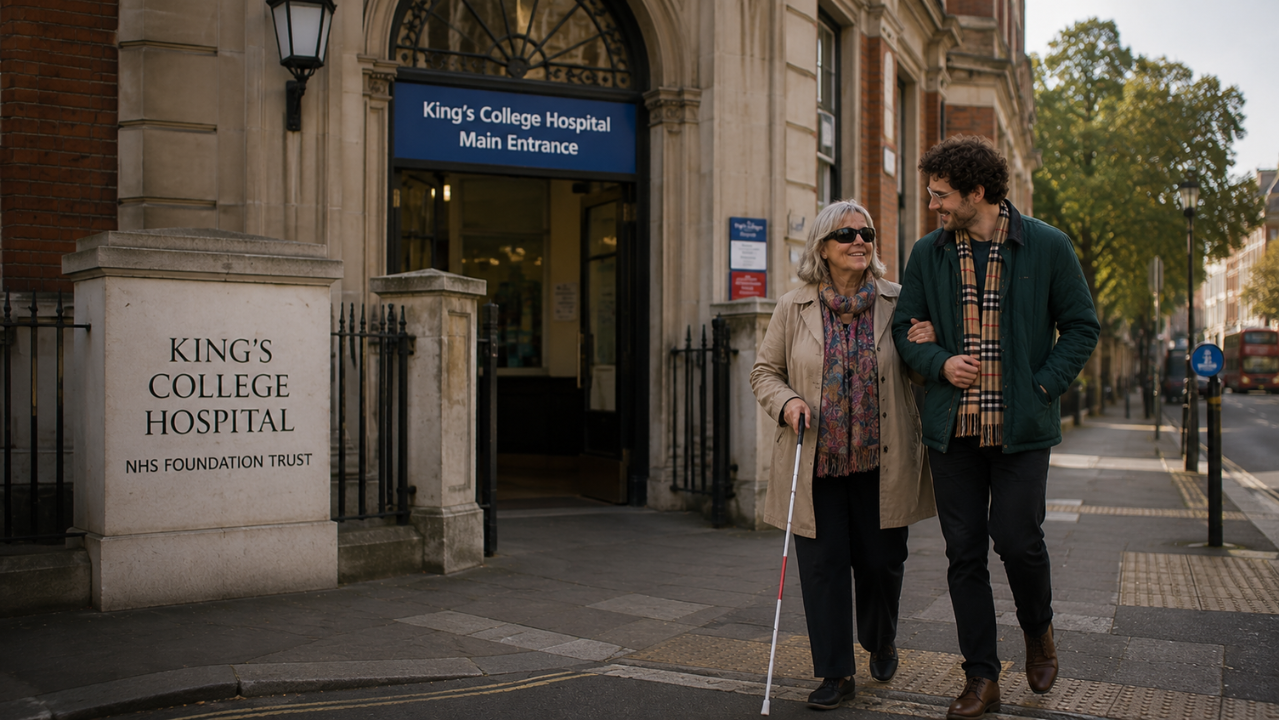
What is a sighted guide? A sighted guide is a trained volunteer who accompanies a blind or partially sighted person on a journey, offering a guiding arm and describing the route and surroundings. At Travel Hands, sighted guides meet VIPs at their nearest London station and travel with them to their destination.
Are Travel Hands VIP Ambassadors paid? Yes. VIP Ambassadors are paid by the hour for agreed activities. The role is paid work, not volunteering. The number of hours will be decided based on the scope of each event.
Who can become a VIP Ambassador? Blind and partially sighted people in London who use Travel Hands, are organised and reliable, and are comfortable communicating with volunteers, participants and partner charities. No prior experience is needed.
How do I volunteer with blind and partially sighted people in London? Register as a Travel Hands volunteer, complete our sighted guide training, and you'll be matched with VIPs for journeys across London. Training walks are led by blind and partially sighted Ambassadors.
Where in London do Travel Hands events take place? Guided walks and meet-ups run across London boroughs this autumn, including Croydon, co-hosted with partner organisations Metro Blind Sport, Beyond Sight Loss and Croydon Vision. Our volunteer sighted guides meet attendees at their nearest station and accompany them home afterwards.
Is there a cost to attend? No. Events are free to attend for VIPs and free to host for partner organisations. Travel assistance is provided at no charge.
How do I become a walking guide volunteer in London? Register with Travel Hands and complete our sighted guide training, which includes a practical training walk led by a blind or partially sighted Ambassador. You'll then be matched as a walking companion for journeys and guided walks across London. No qualification or prior experience is required.
How can I help a blind person travel independently? Ask before you assist, offer your arm rather than taking theirs, describe what's ahead instead of steering, and say when you're leaving. If you want to do this regularly and properly, sighted guide training takes an afternoon. Read more.
Which charities support visually impaired people in London? Alongside Travel Hands, London is served by organisations including Metro Blind Sport for sport and social activity, Croydon Vision for borough-level support in Croydon, and Beyond Sight Loss for independent living.
Can you stay active with a visual impairment? Yes. Walking, athletics, bowls, cricket, football, tennis and swimming are all played by blind and partially sighted people in London, with minor adaptations and trained coaches. The usual barrier isn't the sport it's getting to the venue, which is the gap Travel Hands exists to close.
Be a part of

