How to Talk to a Blind or Visually Impaired Person: A Practical Guide for First-Time Volunteers
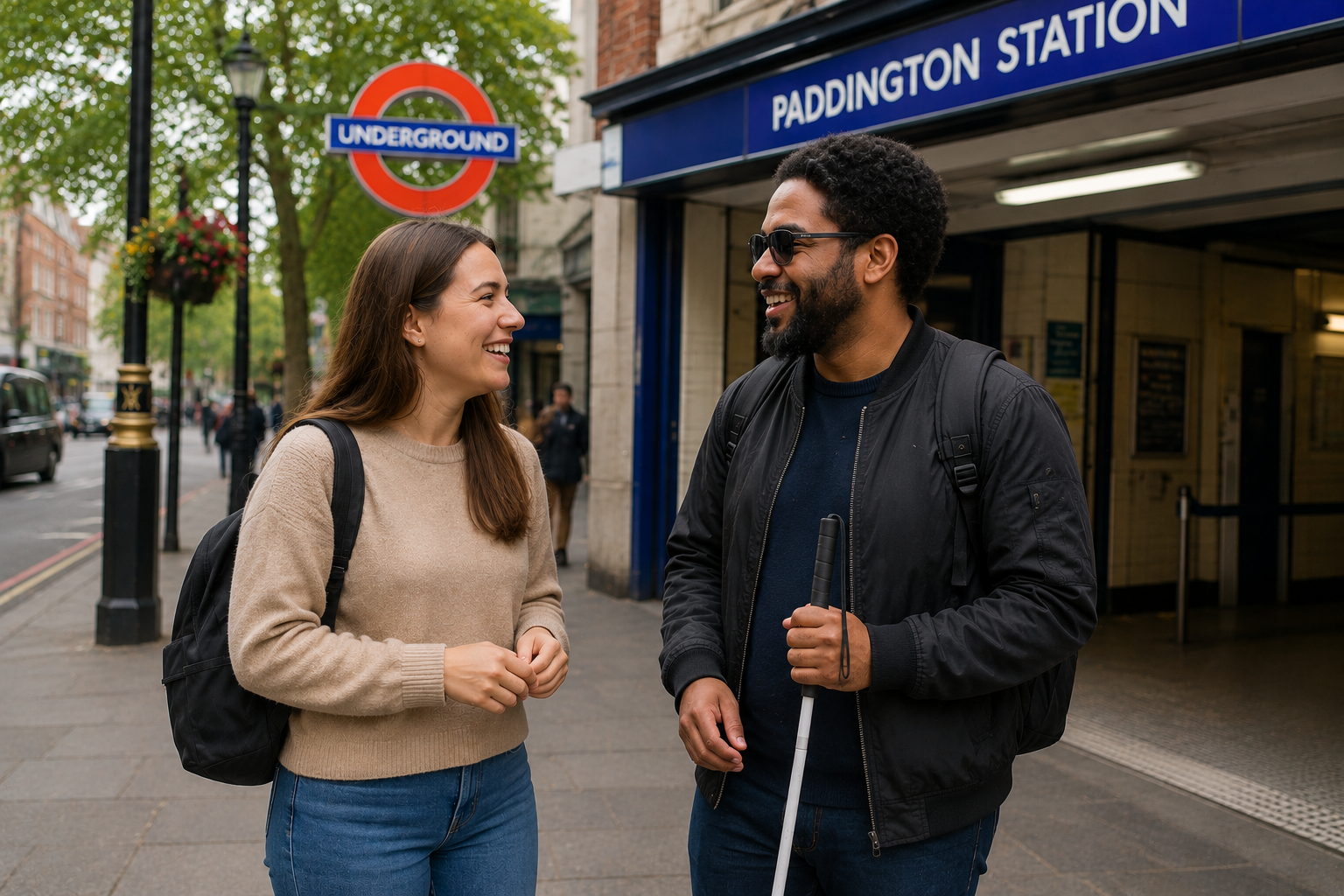
One of the biggest concerns new volunteers have isn't learning how to guide someone safely. It's worrying about saying the wrong hing.
Many people want to volunteer in London with blind and visually impaired individuals, but they hesitate. They feel unsure about how to start a conversation, whether they should offer help, or if certain everyday words might be considered inappropriate.
The good news? Communicating with someone who has sight loss is usually much simpler than people expect. You don't need a special vocabulary or a flawless script. To be an impactful volunteer in London, you simply need respect, clear communication, and a genuine willingness to listen.
Quick Answer: How Should You Talk to a Blind or Visually Impaired Person?
Speak naturally, introduce yourself, talk directly to the person rather than someone accompanying them, and always ask before offering assistance. There is no need to avoid everyday words such as "look" or "see." Most importantly, remember that every individual has different preferences, so listening and communicating openly is always the best approach.
Why Good Communication Matters
Many people assume the biggest challenge for a volunteer is learning how to guide someone safely.
In reality, communication often has the biggest impact on building trust and making someone feel comfortable. Good communication helps volunteers:
- Build Confidence
- Understand individual preferences
- Explain surroundings clearly
- Navigate unfamiliar environments together
- Create a more relaxed and enjoyable experience
The goal isn't to communicate differently. It's to communicate thoughtfully.
Start by Introducing Yourself
One of the easiest ways to make someone feel comfortable is simply introducing yourself.
Rather than assuming the person knows you're nearby, say something like:
"Hi, I'm Sarah from Travel Hands. It's lovely to meet you."
If you're leaving the conversation, let them know.
For example:
"I'll just be back in a moment."
This prevents awkward situations where someone continues speaking without realising you've walked away.
Simple introductions create clarity and help build trust from the very beginning.
Speak Directly to the Person
This is one of the most important communication tips.
If someone is accompanied by a friend, family member, or colleague, always speak directly to the blind or visually impaired person, not to the person beside them.
Instead of asking:
"Would they like a seat?"
Ask:
"Would you like to sit down?"
It may seem like a small difference, but it shows respect and acknowledges the person's independence.
Offer Help, Don't Assume It's Needed
Many visually impaired people travel independently using a white cane, guide dog, technology, or familiar routes.
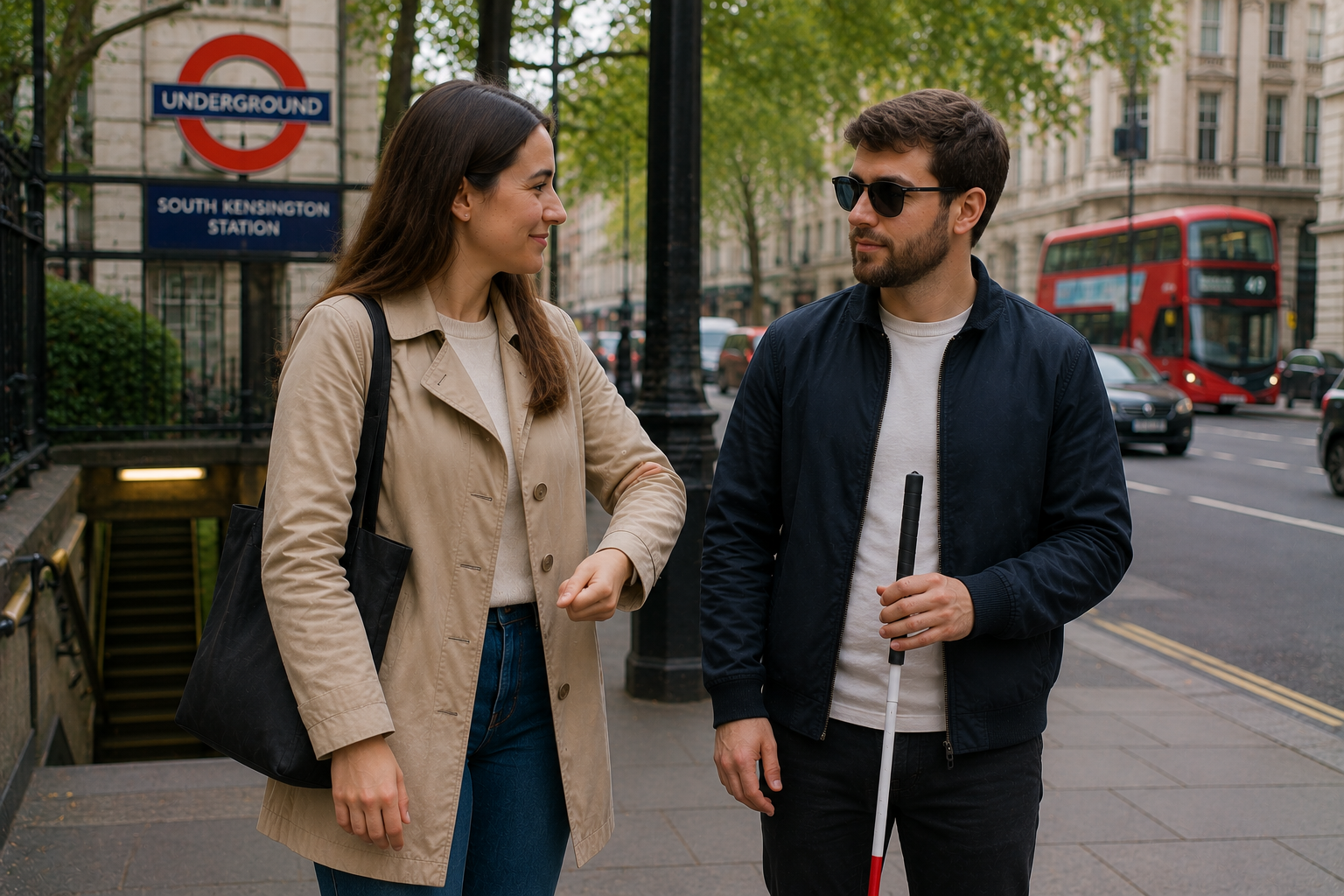
Rather than assuming someone needs assistance, ask first.
A simple question such as:
"Would you like any assistance?"
gives the person the opportunity to accept or decline.
If they say no, respect their decision.
Offering help is thoughtful.
Insisting on helping when it isn't wanted can take away someone's independence.
If you're new to volunteering, you may also find our guide on What Is a Sighted Guide Volunteer and What Does the Role Actually Involve? helpful for understanding when and how volunteer support is used.
Is It Okay to Say "See You Later"?
Yes.
This is one of the questions new volunteers ask most often.
Many people worry that words such as:
- see
- look
- watch
- read
might be offensive.
They aren't.
People who are blind or visually impaired frequently use these words themselves because they are part of everyday language.
Instead of worrying about individual words, focus on having a natural conversation.
Most people appreciate genuine communication far more than carefully avoiding common expressions.
Describe What's Happening Around You
When travelling together, describing the environment can make journeys more comfortable.
For example, you might mention:
- "We're approaching the station entrance."
- "The pavement becomes slightly narrower here."
- "There's a café on your right."
- "The lift is just ahead."
These descriptions provide useful context without overwhelming the conversation.
You don't need to describe everything.
Simply communicate information that helps the person understand their surroundings.
Ask Before Taking Action
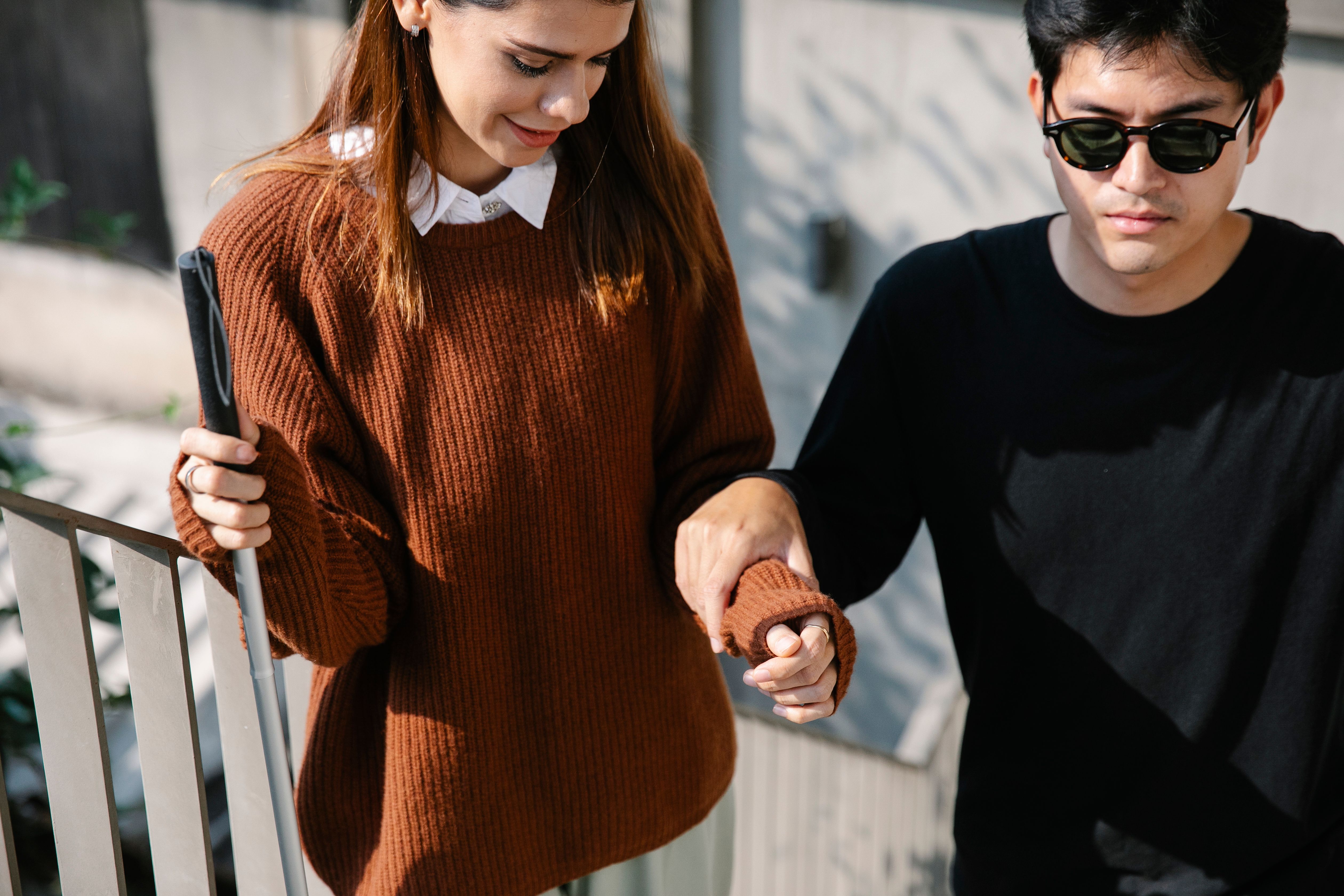
Good volunteers communicate before they act.
Instead of suddenly opening a door, changing direction, or guiding someone by the arm, explain what you're doing.
For example:
- "There's a step coming up."
- "We'll turn left in a moment."
- "The platform is becoming busier."
Small updates help people feel informed and in control of the journey.
What If You Say the Wrong Thing?
Many first-time volunteers worry about making a mistake.
The reality is that everyone occasionally says the wrong thing.
If it happens:
- Don't panic.
- Listen.
- Apologise if necessary.
- Continue the conversation naturally.
Most people value kindness, honesty, and respect far more than perfect communication.
One awkward moment won't define the experience.
Your willingness to learn will.
A Travel Hands Perspective
At Travel Hands, one of the most common things we hear from new volunteers is:
"I was much more nervous before the journey than I needed to be."
After completing their first journey, many volunteers realise that conversations become natural very quickly.
Like any new experience, confidence grows with practice.
The most important qualities aren't perfect words.
They're empathy, curiosity, patience, and respect.
Ready to Put These Skills Into Practice?
Good communication is one of the most valuable skills a volunteer can develop.
You don't need to memorise scripts or worry about finding the perfect words.
You simply need to be respectful, listen carefully, and treat every person as an individual.
If you're ready to use these communication skills to support blind and visually impaired people across London, becoming a Travel Hands Guide is a meaningful place to start.
Become a Travel Hands Guide and help create a more accessible London, one conversation and one journey at a time.
Be a part of

