How to Help a Blind or Visually Impaired Person in Public (Do’s & Don’ts)
Most people want to help.
But when it comes to supporting a blind or visually impaired person (VIP) in public, uncertainty often gets in the way.
Should you step in?
What if you do the wrong thing?
Is it better to help or not?
The reality is simple:
- The right kind of help makes a situation safer and more comfortable
- The wrong kind of help can create confusion
This guide explains exactly how to help a VIP in public, in a way that is respectful, practical, and based on real-world experience.
Understanding Vision Impairment (Why Help Matters)
Vision impairment is not one experience.
According to the Royal National Institute of Blind People, many VIPs have some level of vision, such as blurred sight, tunnel vision, or light perception.
If you want to better understand this, you can read our guide on : what visually impaired people actually see
Globally, the World Health Organization estimates over 2 billion people live with vision impairment.
This means every interaction is different, and help should always be adaptable.
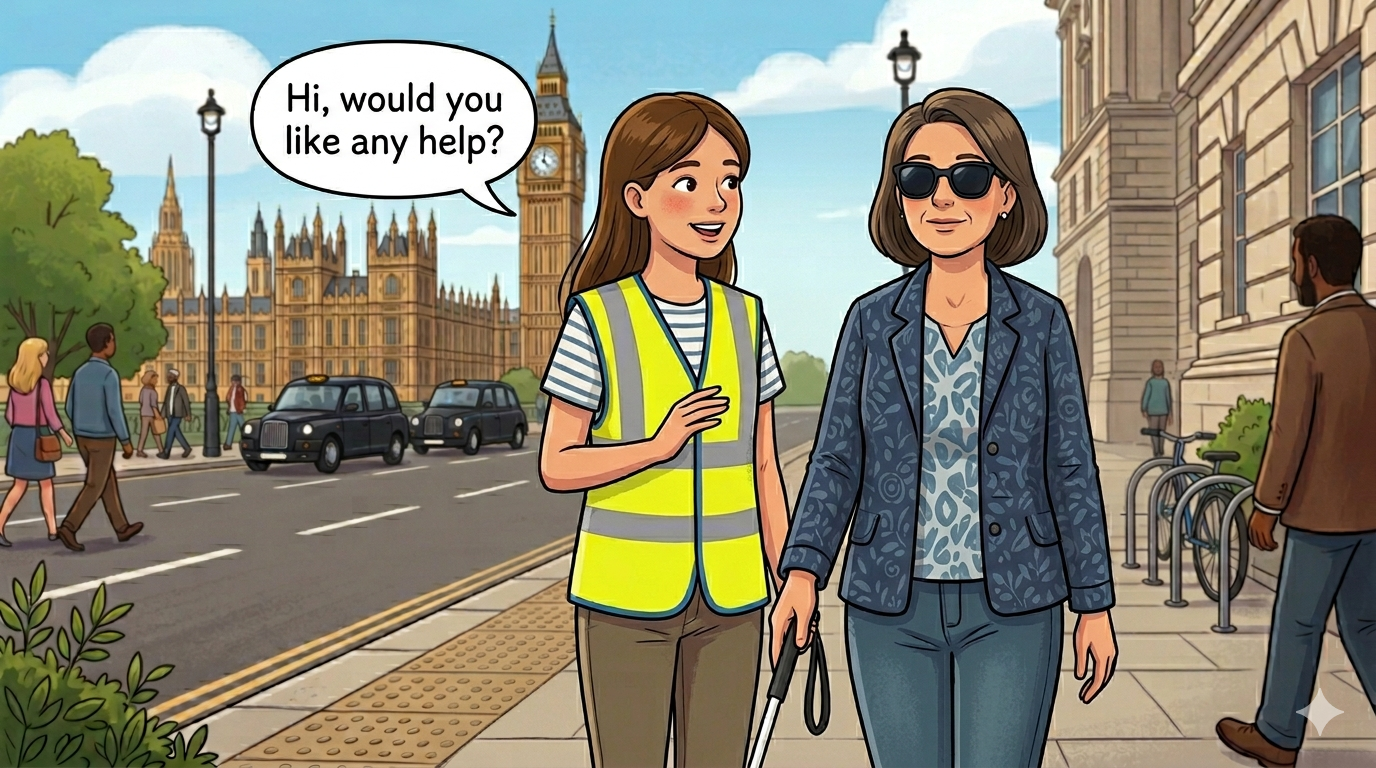
Before You Help: Always Ask First
The most important rule:
Never assume, always ask
“Hi, would you like any help?”
This respects independence and gives the VIP control.
How to Help a Blind or Visually Impaired Person (Step-by-Step)

Introduce Yourself Clearly
“Hi, I’m on your right.”
This helps with orientation, especially in busy environments.
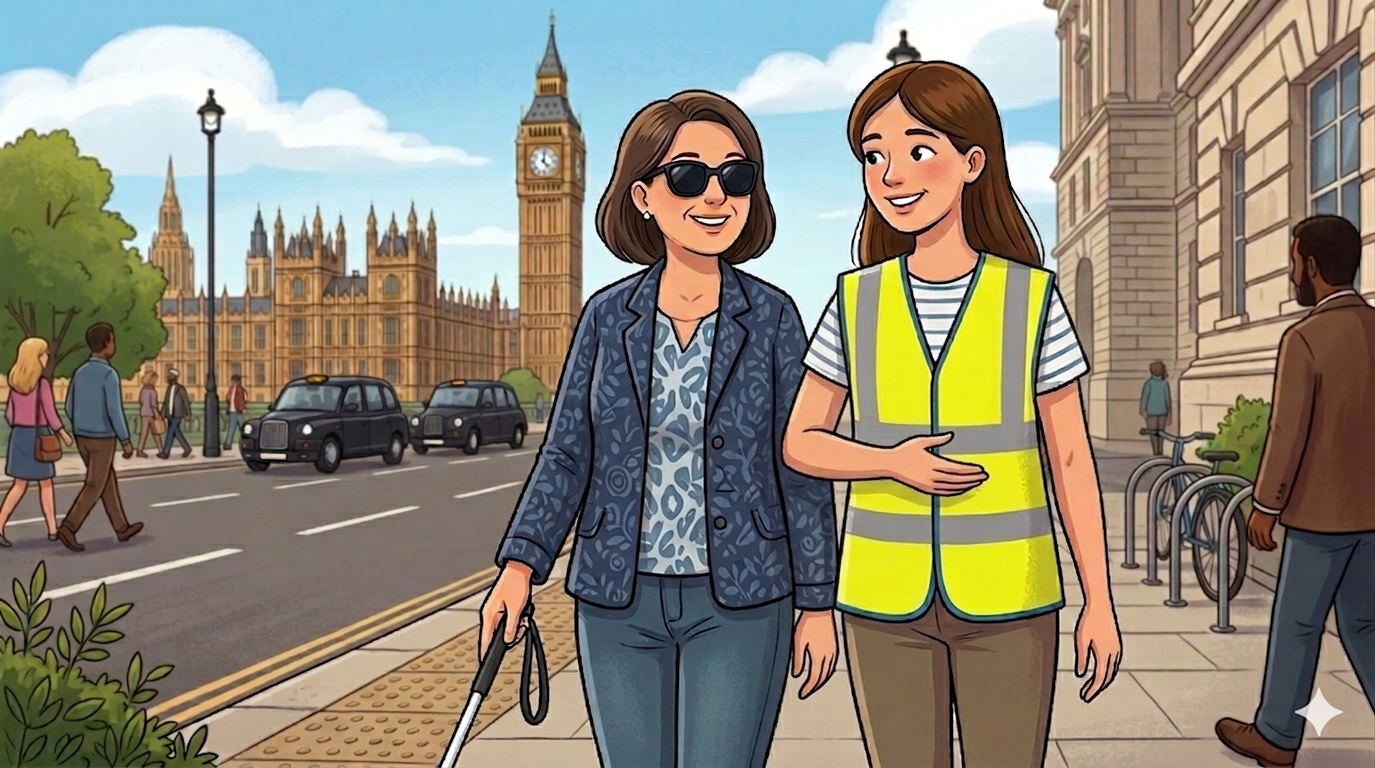
Offer Your Arm, Don’t Grab
Never pull or push.
Instead:
- Offer your arm
- Let the VIP hold above your elbow
This is the safest way to guide.

Walk Naturally
- Keep a steady pace
- Avoid sudden movements
- Let them follow your lead

Communicate Clearly
Describe what’s ahead:
- “We’re approaching stairs going down”
- “There’s a step up here”
- “We’re turning left”
Clear communication reduces uncertainty.

Pause Before Changes
Always pause before:
- Stairs
- Curbs
- Escalators
- Doors
What Is the Sighted Guide Technique?
The sighted guide technique allows VIPs to move safely and independently.
- They hold your arm
- You walk slightly ahead
- Your movement guides direction
You are not controlling, you are supporting.
How to Guide a VIP in Real Situations
Walking in Public Spaces
- Mention obstacles
- Keep movement steady
- Avoid sudden stops
Crossing the Road
- Stand together
- Describe traffic
- Walk at a steady pace
Public Transport
According to Transport for London, assistance is available but real-time support can vary.
You can help by:
- Guiding to platforms
- Explaining gaps
- Identifying doors
Stairs
- Pause before reaching
- Say “stairs up” or “down”
- Let them find the rail
Do’s and Don’ts
Do’s
- Ask before helping
- Speak directly
- Give clear directions
- Be patient
Don’ts
- Don’t grab
- Don’t assume
- Don’t rush
- Don’t give vague directions
How VIPs Experience Public Spaces
Many VIPs describe public environments as:
- Manageable with support
- Stressful when unpredictable
Research shows that uncertainty is often the biggest challenge, not just physical barriers.
How People Prefer to Be Helped
There is no one-size approach.
The best method is:
Ask → Listen → Adapt
Beyond One Moment: Supporting in a Bigger Way
Helping someone once is meaningful.
But many VIPs need support regularly, especially for everyday journeys.
That’s why more people are looking for flexible ways to volunteer in London and support visually impaired people in real-life situations.
If you’re interested, you can learn more about
becoming a Travel Hands Guide in London - https://www.travelhands.co.uk/travelhandsvolunteer
This kind of support fits around daily life while making a real impact.
Helping a blind or visually impaired person in public is not about doing something extraordinary.
It’s about doing something thoughtfully and respectfully.
- Ask first
- Guide, don’t control
- Communicate clearly
- Respect independence
Because in many cases:
A small moment of help can change someone’s entire journey.
Be a part of

