VIP Assistant: Travel Hands test cases on remote assistance
For many visually impaired people (VIPs), independence is not a lack of ability.
it is a lack of reliable support when the environment fails them.
At Travel Hands, we are actively working with a focused group of visually impaired individuals to test, learn, and refine a new model of support: virtual guiding for outdoor journeys.
This work is not theoretical.
It happens on real pavements, real crossings, real buses, and inside real buildings, where accessibility is often inconsistent or absent.
Below, we share two journeys from this training phase that clearly demonstrate what was done, what worked, what didn’t, and why this matters.
The Aim of This Work
This initiative was created to answer a critical question:
Can visually impaired people travel independently outdoors with remote, real-time human guidance, when physical assistance is not available?
To explore this, we supported VIPs through real journeys they wanted and needed to take:
- Fitness
- Shopping
- Everyday independence
Each journey was approached as a learning opportunity, not a controlled demonstration.
What Travel Hands Put in Place
Before each journey, Travel Hands ensured structured, intentional support:
- A trained Travel Hands Guide remained on a live WhatsApp call throughout
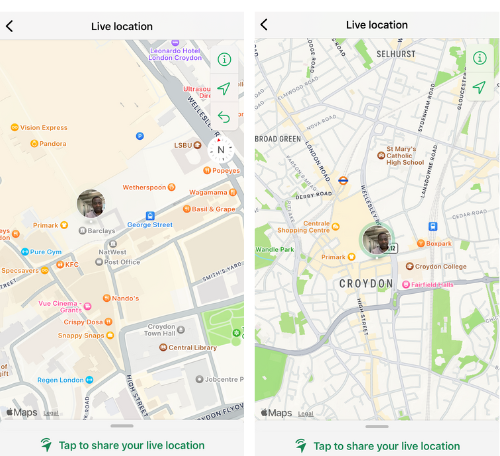
- Live location sharing was enabled so progress could be monitored safely
- The VIP could share their camera feed if visual clarification was needed
- Smart glasses were tested, where available, to enhance remote guidance
- The VIP led the journey, the Guide supported decision-making, not control
The aim was clear: enable independent movement while providing reassurance, orientation, and safety support when required.
Journey One: Travelling Alone to the Gym
This journey involved travelling independently from home to a gym, followed by planned support inside the building.
How the Journey Unfolded
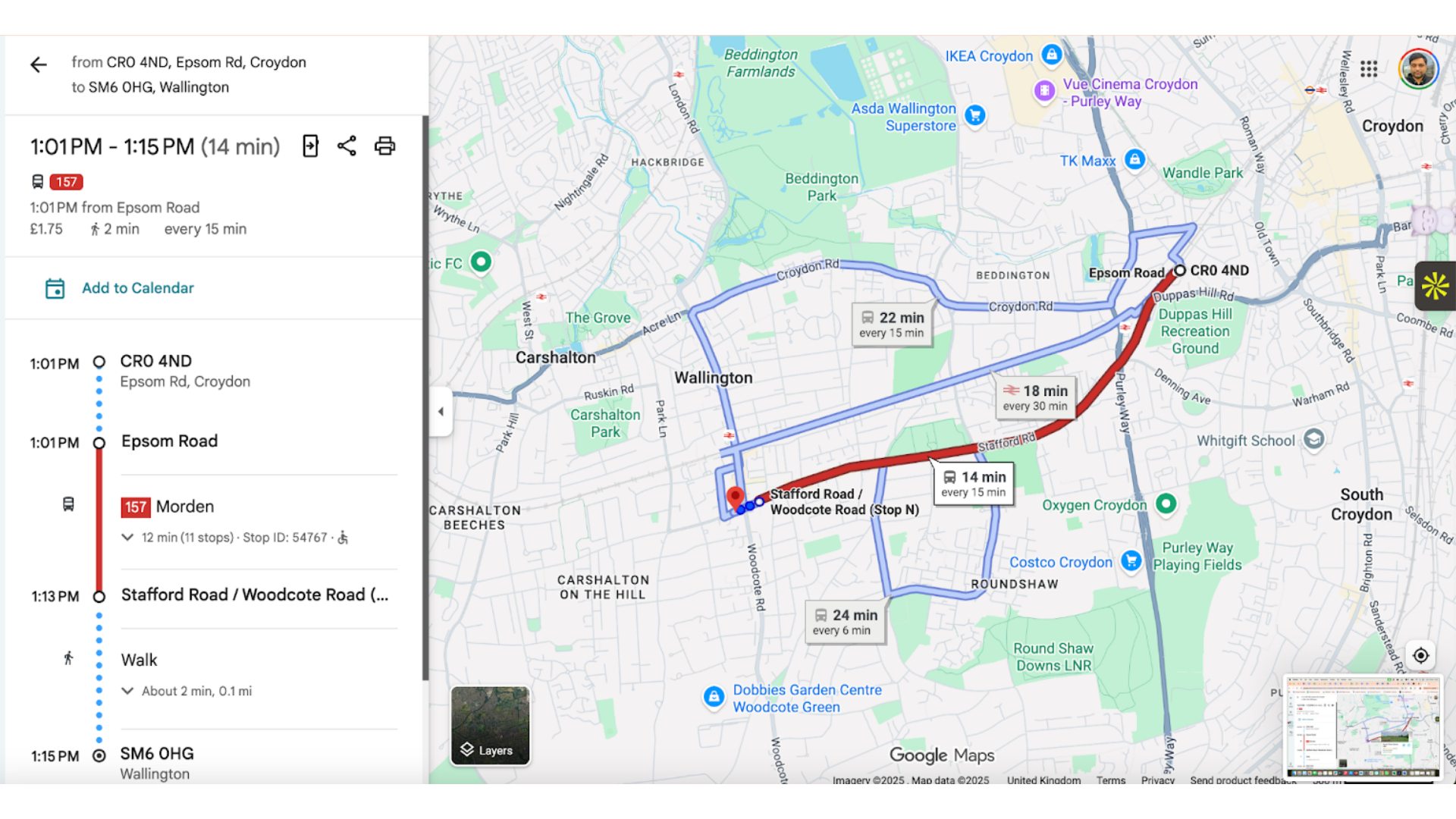
By the time the call connected, the VIP had already reached the bus stop and boarded the correct bus independently.
Travel Hands confirmed the bus number, tracked the journey in real time, and prepared for the exit point.
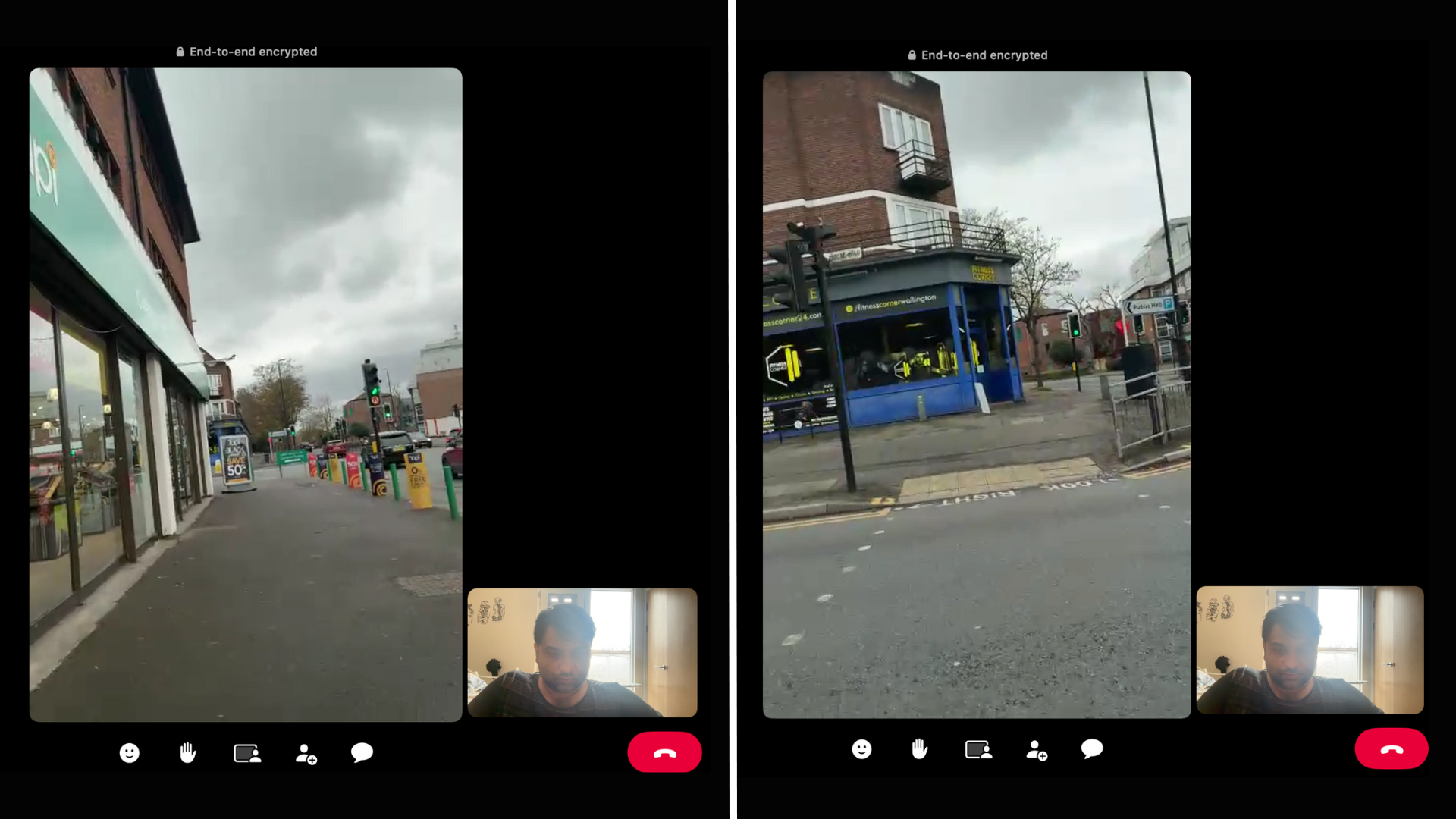
After disembarking, the VIP continued walking confidently, but used virtual guidance when barriers appeared:
- Objects obstructing the pavement
- Directional uncertainty
- A complex road crossing without pedestrian signals
At the crossing, traffic volume was high and unpredictable. The Guide advised waiting, reassessing, and repositioning. A member of the public assisted with crossing, reinforcing that community support still plays a vital role, even with technology.
Live video call used for virtual guiding, allowing a Travel Hands Guide to support safe navigation by describing obstacles, crossings, and traffic conditions in real time.
How the Journey Unfolded
By the time the call connected, the VIP had already reached the bus stop and boarded the correct bus independently.
Travel Hands confirmed the bus number, tracked the journey in real time, and prepared for the exit point.
After disembarking, the VIP continued walking confidently, but used virtual guidance when barriers appeared:
- Objects obstructing the pavement
- Directional uncertainty
- A complex road crossing without pedestrian signals
At the crossing, traffic volume was high and unpredictable. The Guide advised waiting, reassessing, and repositioning. A member of the public assisted with crossing, reinforcing that community support still plays a vital role, even with technology.
Where the Barriers Became Clear
The gym entrance presented significant accessibility challenges:
- The layout was difficult to interpret
- Entry points were unclear
- The VIP became physically stuck while attempting to enter
Attempts to use smart glasses indoors were unsuccessful due to technical limitations. Despite problem-solving and screen sharing, visual access could not be restored.
Before assistance inside the gym could be completed, pre-arranged transport arrived unexpectedly early, removing the opportunity to continue.
Outcome
The VIP completed the outdoor journey independently, but systemic barriers, building accessibility, technology failure, and rigid transport policies prevented the activity from being completed.
This outcome was not a failure of the individual.
It was a real-world exposure of where systems still break independence.
Journey Two: Independent Shopping in a Busy Retail Area
The second journey focused on everyday tasks, walking through a market area, navigating shops, and making a purchase.
This journey showed a different side of virtual guiding.
How the Journey Unfolded
The VIP walked independently between locations while remaining connected to the Guide.
Support was offered only when needed.
Along the way:
- Verbal directions were used at junctions
- Members of the public offered assistance naturally
- The VIP made independent decisions with reassurance rather than instruction
Inside retail spaces, the focus shifted to:
- Orientation
- Layout understanding
- Confidence moving within busy environments
The VIP successfully navigated stores and completed a purchase independently.
Outcome
A successful everyday journey, completed with minimal intervention, demonstrates how virtual guiding can quietly enable independence rather than dominate it.
The Role Travel Hands Played
Across both journeys, Travel Hands acted as:
- A safety net - present without being intrusive
- A navigator - describing space, barriers, and options
- A confidence builder - enabling decision-making, not dependency
- A learning partner - observing where systems support or restrict independence
This was not passive support.
It was active, skilled, human guidance delivered remotely.
Why This Work Is Important
These journeys highlight a critical truth:
Independence is not just about skill; it is about whether systems allow it.
What We Learned
- Outdoor navigation can be effectively supported remotely
- Real-time human guidance significantly increases confidence
- Indoor accessibility remains a major barrier
- Transport systems often prioritise operational convenience over user autonomy
- Technology must be reliable to be empowering; otherwise, it becomes another obstacle
Why This Matters for the Future
This training phase is helping us build a model that:
- Expands access to support without requiring physical presence
- Scales human assistance sustainably
- Complements, rather than replaces, physical guiding
- Centres dignity, choice, and independence
We are not testing an idea in isolation.
We are learning directly from lived experience.
Moving Forward
This work is still evolving, and that is exactly why it matters.
Each journey strengthens our understanding of:
- What VIPs actually need
- Where environments still exclude
- How remote support can bridge real gaps
With continued funding and collaboration, this model can:
- Support more VIPs
- Reduce isolation
- Increase confidence in everyday travel
- Push accessibility conversations beyond theory and into action
Because independence should not depend on luck, availability, or perfect conditions.
It should be designed, supported, and protected.
Where the Barriers Became Clear
The gym entrance presented significant accessibility challenges:
- The layout was difficult to interpret
- Entry points were unclear
- The VIP became physically stuck while attempting to enter
Attempts to use smart glasses indoors were unsuccessful due to technical limitations. Despite problem-solving and screen sharing, visual access could not be restored.
Before assistance inside the gym could be completed, pre-arranged transport arrived unexpectedly early, removing the opportunity to continue.
Outcome
The VIP completed the outdoor journey independently, but systemic barriers, building accessibility, technology failure, and rigid transport policies prevented the activity from being completed.
This outcome was not a failure of the individual.
It was a real-world exposure of where systems still break independence.
Journey Two: Independent Shopping in a Busy Retail Area
The second journey focused on everyday tasks, walking through a market area, navigating shops, and making a purchase.
This journey showed a different side of virtual guiding.
How the Journey Unfolded
The VIP walked independently between locations while remaining connected to the Guide.
Support was offered only when needed.
Along the way:
- Verbal directions were used at junctions
- Members of the public offered assistance naturally
- The VIP made independent decisions with reassurance rather than instruction
Inside retail spaces, the focus shifted to:
- Orientation
- Layout understanding
- Confidence moving within busy environments
The VIP successfully navigated stores and completed a purchase independently.
Outcome
A successful everyday journey, completed with minimal intervention, demonstrates how virtual guiding can quietly enable independence rather than dominate it.
The Role Travel Hands Played
Across both journeys, Travel Hands acted as:
- A safety net - present without being intrusive
- A navigator - describing space, barriers, and options
- A confidence builder - enabling decision-making, not dependency
- A learning partner - observing where systems support or restrict independence
This was not passive support.
It was active, skilled, human guidance delivered remotely.
Why This Work Is Important
These journeys highlight a critical truth:
Independence is not just about skill; it is about whether systems allow it.
What We Learned
- Outdoor navigation can be effectively supported remotely
- Real-time human guidance significantly increases confidence
- Indoor accessibility remains a major barrier
- Transport systems often prioritise operational convenience over user autonomy
- Technology must be reliable to be empowering; otherwise, it becomes another obstacle
Why This Matters for the Future
This training phase is helping us build a model that:
- Expands access to support without requiring physical presence
- Scales human assistance sustainably
- Complements, rather than replaces, physical guiding
- Centres dignity, choice, and independence
We are not testing an idea in isolation.
We are learning directly from lived experience.
Moving Forward
This work is still evolving, and that is exactly why it matters.
Each journey strengthens our understanding of:
- What VIPs actually need
- Where environments still exclude
- How remote support can bridge real gaps
With continued funding and collaboration, this model can:
- Support more VIPs
- Reduce isolation
- Increase confidence in everyday travel
- Push accessibility conversations beyond theory and into action
Because independence should not depend on luck, availability, or perfect conditions.
It should be designed, supported, and protected.
Be a part of

