How Much Support Does a Blind Person Get in London?
Disability Benefits, Free Travel & Real-World Help (2026 Guide)

Living in London with sight loss can be expensive, confusing, and exhausting, especially when you’re trying to understand what financial help exists, what travel support you’re entitled to, and where the gaps still are.
This guide explains, in simple terms, what blind and visually impaired people in London can get in 2026, including:
- What support doesn’t cover
- Disability benefits
- Free and discounted travel
- Extra local support
Whether you’re visually impaired, a family member, a carer, or a supporter — this guide is written for you.
Is There a Specific Benefit Just for Blind People in the UK?


No, and this is important to understand early.
In the UK (including London), there is no single “blindness benefit.”
Instead, support is based on how sight loss affects daily life, not the diagnosis itself.
Most financial support comes through benefits run by the Department for Work and Pensions and through local travel schemes in London.
Personal Independence Payment (PIP), Main Benefit for Working-Age Adults
If you are 16 to State Pension age, the main benefit is Personal Independence Payment (PIP).
Key things to know about PIP
- It is tax-free
- It is not means-tested
- You can work and still receive it
- It is paid every 4 weeks
PIP looks at how sight loss affects you, such as:
- Reading letters or screens
- Managing money
- Cooking safely
- Planning journeys
- Travelling alone
Many blind and visually impaired people (VIPs) qualify even if they don’t use a white cane or guide dog
PIP Rates (2025–2026)
PIP has two parts:
- Daily Living Component
Most visually impaired people qualify here.
- Standard rate: ~£72 per week
- Enhanced rate: ~£108 per week
This covers difficulty with:
- Reading information
- Understanding signs
- Managing everyday tasks safely
- Mobility Component
This looks at journeys, not walking distance.
- Standard rate: ~£28 per week
- Enhanced rate: ~£75 per week
This applies if you struggle with:
- Navigating unfamiliar places
- Crossing roads safely
- Following routes without help
Maximum PIP possible: ~£183 per week
Around £730 per month
Important: PIP is awarded based on impact, not eyesight measurements alone.
Attendance Allowance, For Blind People Over Pension Age
If you are over State Pension age, you cannot claim PIP.
Instead, support comes through Attendance Allowance.
Attendance Allowance rates (2025–2026)
- Lower rate: ~£72 per week
- Higher rate: ~£108 per week
This is based on:
- Needing help
- Needing supervision to stay safe
It does not include mobility payments, but it can unlock extra local support in London.
Universal Credit (LCWRA) — Extra Support if Work Is Limited
Some visually impaired people receive extra Universal Credit through the LCWRA element (Limited Capability for Work and Related Activity).
- Extra ~£390 per month
- On top of standard Universal Credit
- Requires a Work Capability Assessment
This applies if sight loss significantly limits your ability to work.
Do Blind People Get Free Travel in London?
Yes and this is one of the most important supports available.
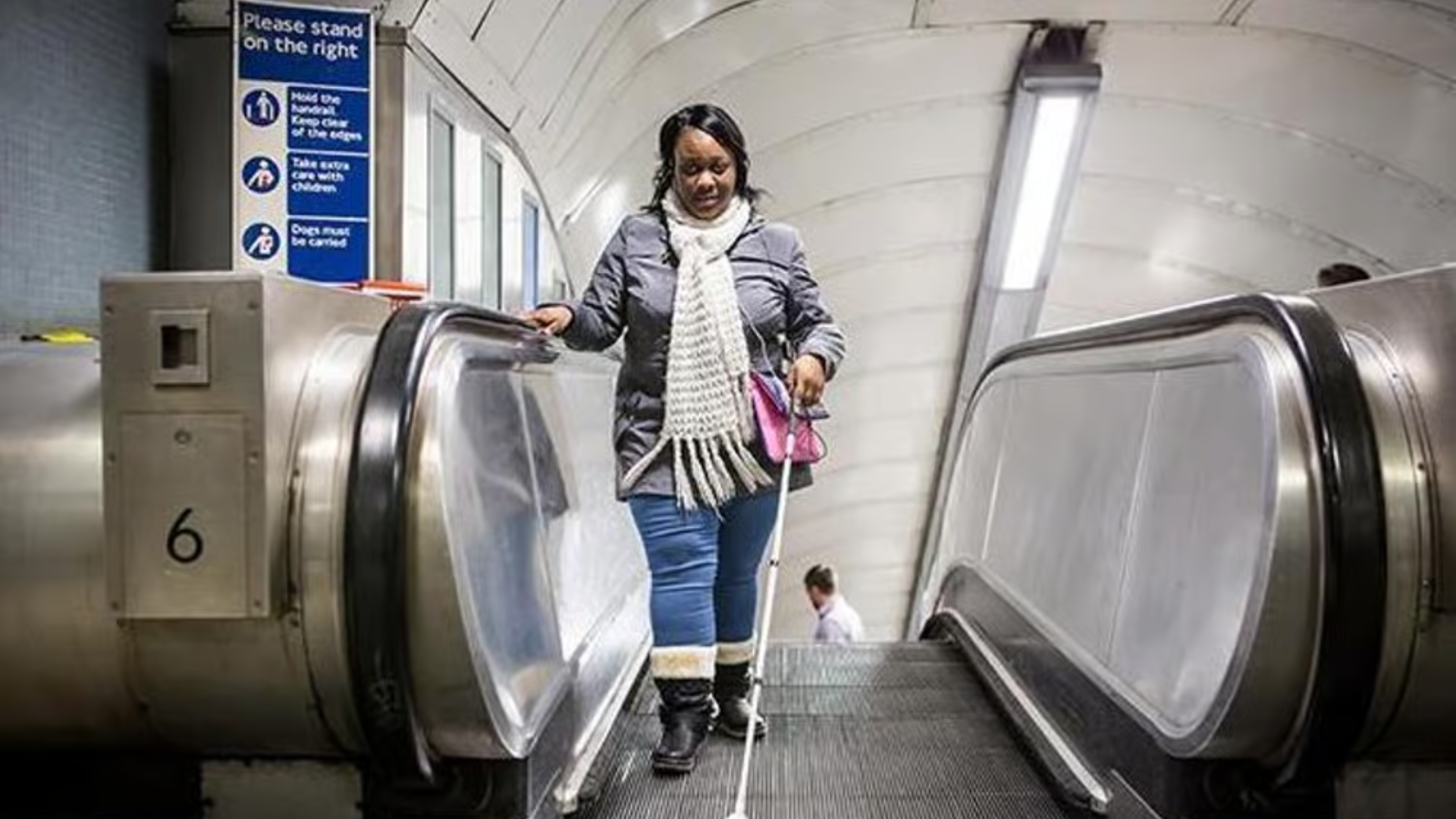
The Freedom Pass (London)
In London, blind and visually impaired residents can apply for the Freedom Pass, supported by local councils and Transport for London.
What the Freedom Pass gives you
- Free bus travel
- Free Tube travel
- Free DLR
- Free Trams
- Free Overground
- Free Elizabeth line travel (within London)
Cost: Free
When you can use it: Anytime (for disabled pass holders)
Who is eligible for the Freedom Pass?
- Registered Sight Impaired or Severely Sight Impaired, or
- Meet disability criteria set by your London borough
Each borough manages applications, but the pass works across all of London.
Disabled Person’s Railcard (UK-Wide)
For train travel beyond London, many visually impaired people use the Disabled Person’s Railcard.
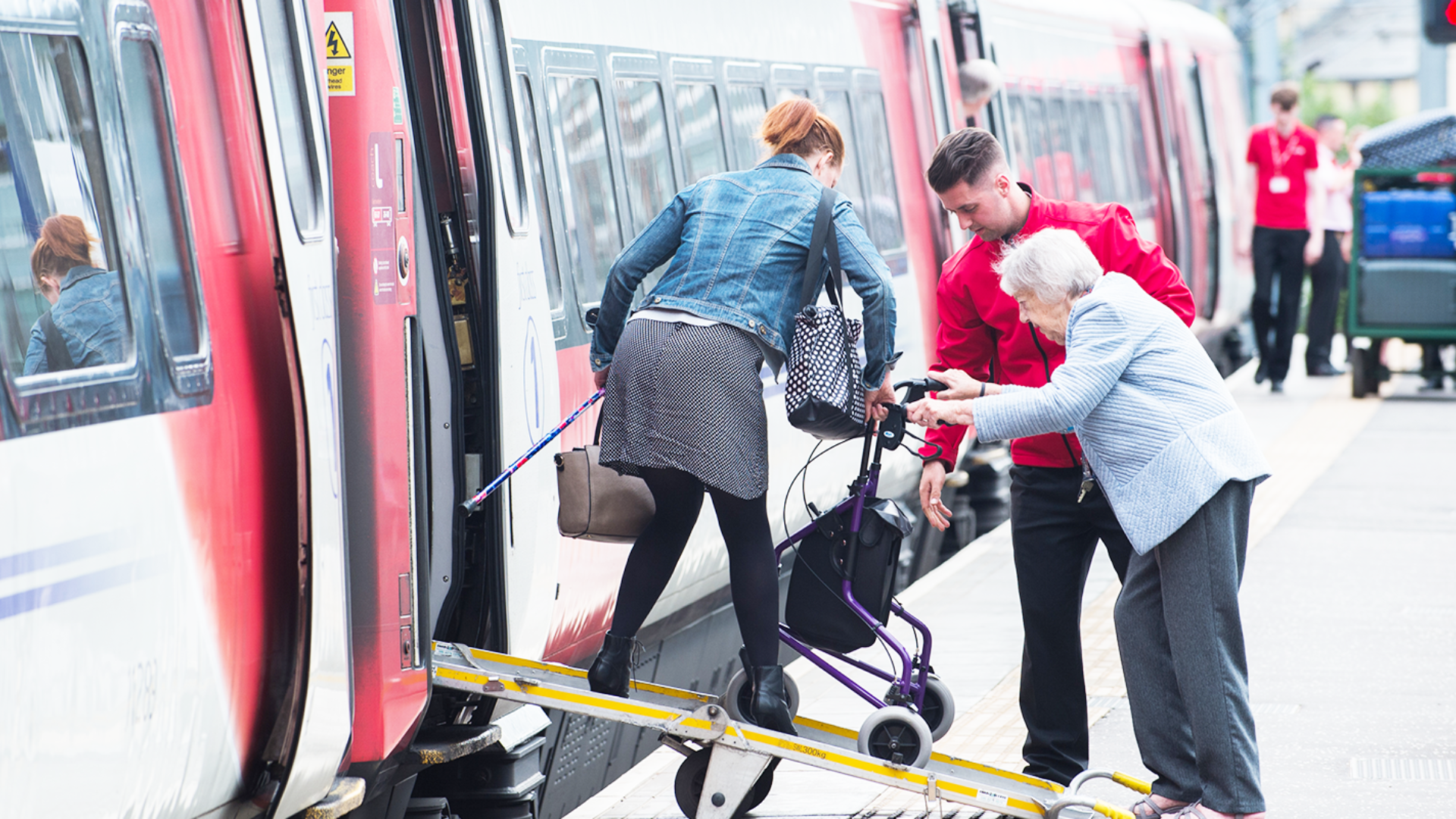
What it offers
- ⅓ off rail fares
- Discount applies to you and one companion
Cost
- £20 for 1 year
- £54 for 3 years
Eligibility usually requires:
- Registration as blind or partially sighted, or
- Medical confirmation from a consultant
Free Bus Travel Outside London
Outside London (in England), visually impaired people are entitled to:
- Free off-peak bus travel
In London, this is replaced by the Freedom Pass.
Other Support Available in London (Varies by Borough)

Depending on where you live, you may also be eligible for:
- Council Tax Reduction
- Taxi card schemes
- Community transport
- Travel mentoring
- Carer’s Allowance (for carers)
Availability and waiting times vary by council.
Do You Have to Be Registered Blind?
Not always.
Being registered as:
- Sight Impaired, or
- Severely Sight Impaired
can make things easier, but:
- PIP and Universal Credit depend on how sight loss affects you
- Some travel schemes accept medical evidence instead
Why Benefits and Free Travel Are Often Not Enough in London
Even with money support and free travel, many visually impaired Londoners still face:
- Busy, unpredictable stations
- Missed stops or platform changes
- Anxiety about getting lost
- Reduced confidence travelling alone
London is fast, and not always forgiving.
Free travel removes the cost.
It doesn’t always remove the risk.
Support Beyond Money: Why Human Help Still Matters
This is where community support makes a real difference.

Alongside benefits and free travel, organisation like Travel Hands support visually impaired people (VIPs) with:
- Accompanied journeys
- Navigation confidence
- Access to healthcare, work, and social life
Human support helps turn entitlement into real independence.
Helpful next step
If you’re interested in supporting visually impaired people (VIPs) in London, or want to make journeys safer and more confident, learn more about becoming a Travel Hands Guide (volunteer for visually impaired people).
Be a part of

