Accessible Tube Travel for Blind Londoners: Why We're Rating Every Station
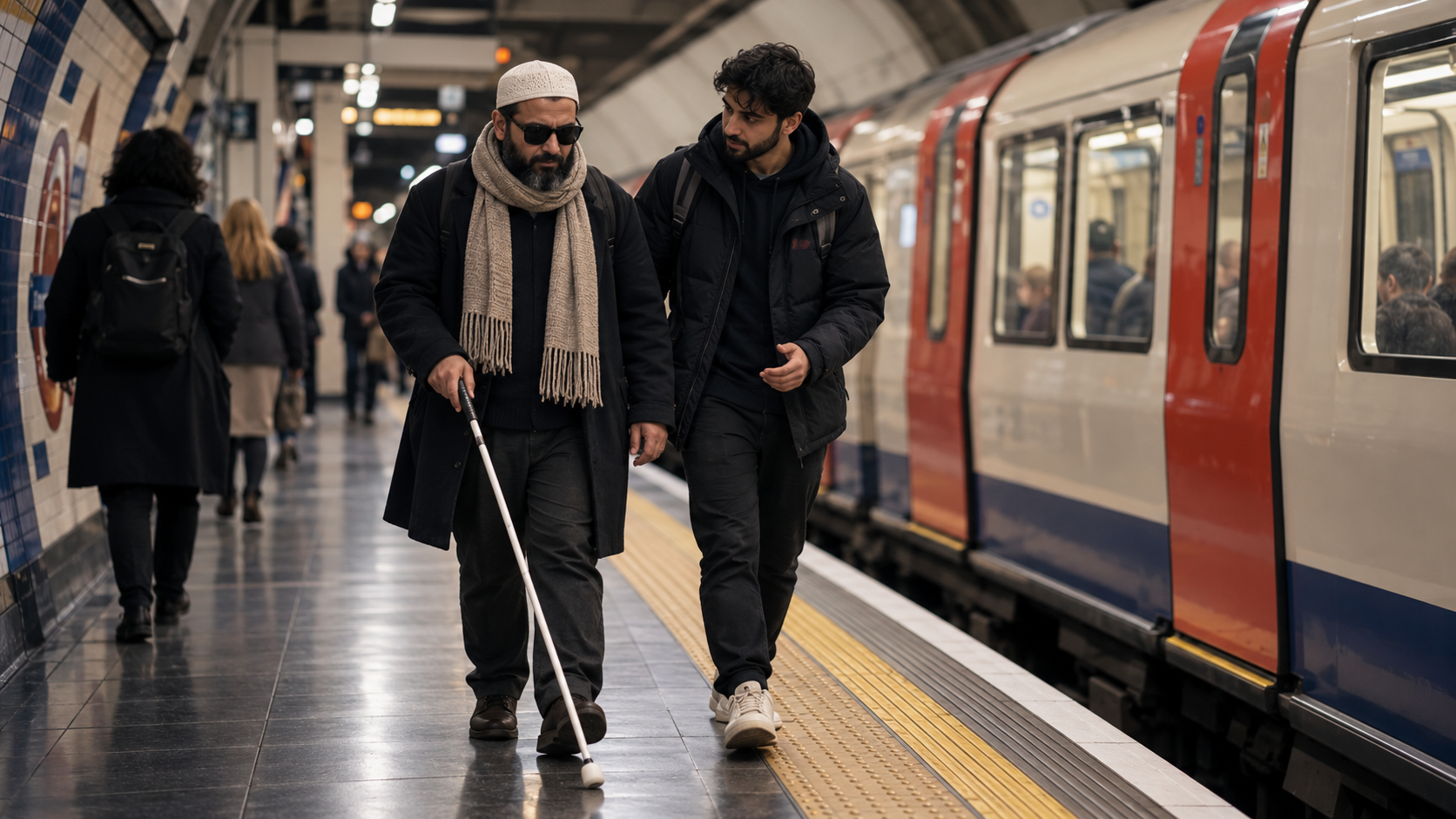
After more than 1,750 assisted journeys across London, one question comes up again and again before a trip: "What's that station like?"
Not "Is it step-free?" That question already has an answer on TfL's maps. The travellers we work with want to know other things. Is there tactile paving at the platform edge? Can you actually hear the announcements? Will there be staff around to help? And once you're inside, how hard is it to find your way to the right platform?
We went looking for one place that answers those questions, station by station, for people with sight loss. We couldn't find it. So we've decided to build it.
The Gap We Kept Running Into
London has a lot to be proud of when it comes to accessible transport. When the London Assembly asked Londoners with sight loss about their journeys, people praised TfL's Turn-up-and-go assistance, and one person described Underground staff as "excellent". The same investigation, though, heard about real barriers to travelling independently, including difficulties moving around stations. As another Londoner put it simply: "Very difficult to know where you are."
The research tells the same story. RNIB's Inclusive Journeys report found that over half of people with sight loss find public transport facilities difficult to navigate, and more than three quarters feel nervous travelling somewhere unfamiliar. A UCL study of visually impaired people in London found that their needs on public transport are not well addressed, and that journey experience is closely tied to a person's independence and inclusion in society.
Here's the gap, as we see it. Most accessibility information about the Tube is built around step-free access. That matters enormously for wheelchair users, and it helps many blind people too. But a station can have lifts on every platform and still be very hard to use if you can't see the signs, can't hear the announcements, or can't feel where the platform ends.
Why the Tube Matters: Independence and Cost
When stations feel uncertain, the obvious fallback is a taxi or a ride-hailing app. For an occasional trip, that's fine. As a way of living in London, it gets expensive very quickly.
Often, the hardest part isn’t the train at all. It’s the first and last mile: the walk from your front door to the station entrance, and from the exit to wherever you’re going. A ten-minute walk that most people barely notice can mean unfamiliar crossings, busy pavements and roadworks if you’re doing it without sight and without help. When that short stretch feels too risky, many people book a taxi for the whole journey instead, paying for the entire trip just to avoid a few minutes on foot.
According to TfL's 2026 taxi fare card, a typical four-mile black cab journey on a weekday costs between £21 and £31, and a six-mile journey between £33 and £42. Do that to and from work each day and, by our estimate, you could be spending well over £200 a week just to get to your job. Compare that with the Tube, where blind and partially sighted Londoners who qualify for a Disabled Persons Freedom Pass can travel free.
This comes on top of costs disabled people already carry. Scope's Disability Price Tag research found that disabled households need an extra £1,095 a month on average, just to have the same standard of living as non-disabled households. Paying for taxis because the Tube feels like a gamble only adds to that.
Taxis aren't always the easy option either. In a 2024 Guide Dogs survey, 58% of guide dog owners said they had been refused by a taxi or minicab, even though refusing an assistance dog is against the law. Around 40% said a driver had driven away after seeing their dog.
And money is only part of it. Public transport means being able to say yes to a last-minute plan with friends, to get to a job interview across the city, or to visit family without booking a car days ahead. It means travelling on the same network as everyone else, at the same price, with the same freedom. That's what accessible Tube travel is really about.

What Step-Free Maps Don't Tell You
We've written before about whether London's public transport is accessible and whether blind people can travel independently. The honest answer to both is "often, yes, but it depends on the station". That's the part nobody has mapped properly.
For someone with sight loss, these are the things that decide whether a station feels manageable:
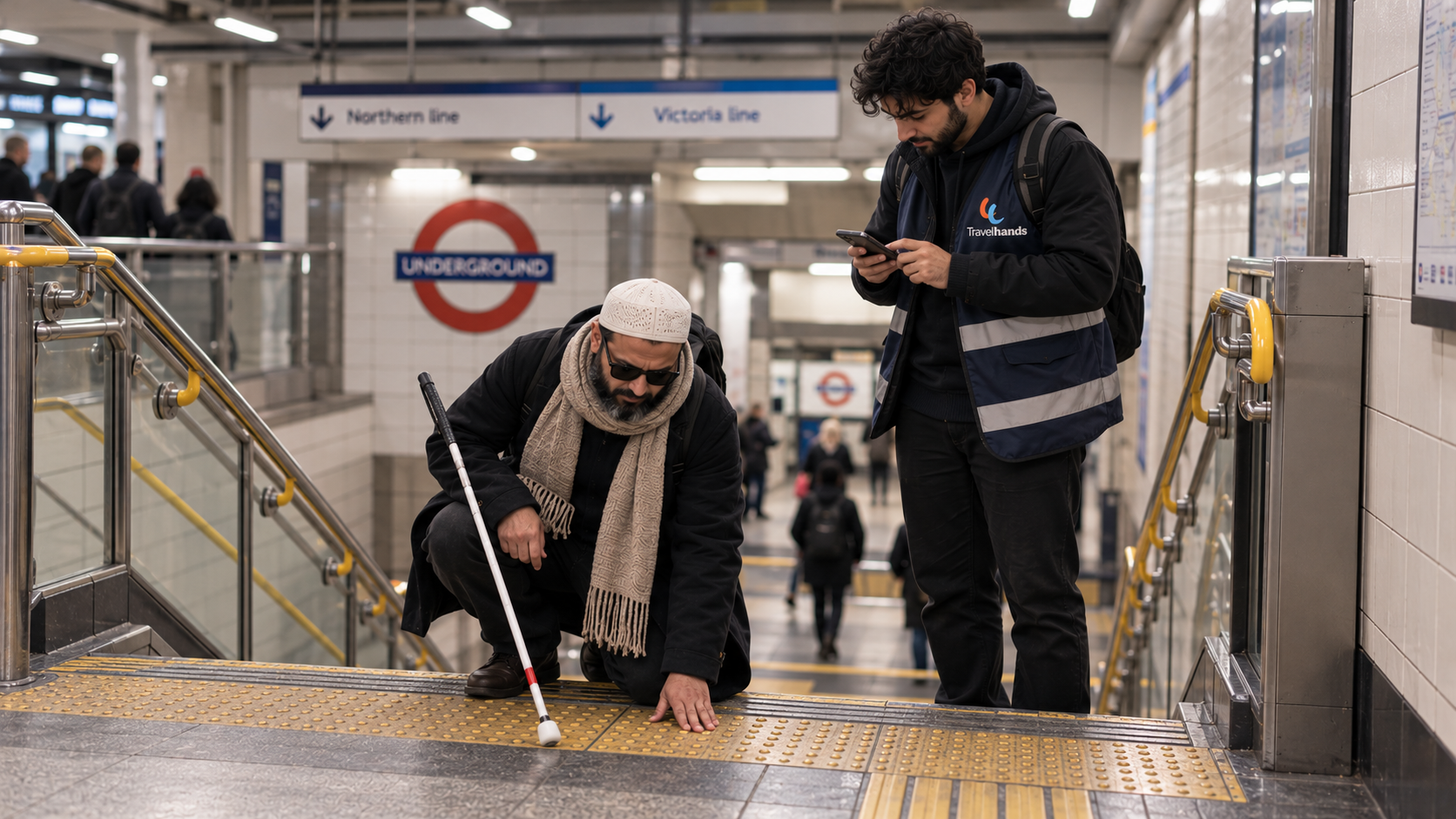
- Tactile paving at platform edges and stairs, so you can feel where the drop is.
- Audio information you can actually hear, from platform announcements to working help points.
- Staff help when you need it, and staff who know how to give it. Staffing still varies from station to station and hour to hour, and we believe every station should have trained staff available whenever it’s open.
- Step-free access, including lifts, ramps and the gap between the train and the platform. This matters for guide dog users and anyone wary of escalators.
- An easy layout, without long, winding interchanges and too many choices about which way to go.
- Visual clarity for people with some sight: readable signs, strong contrast and even lighting.
These six things line up closely with what surveys identifies as essential for passengers with sight loss: physical features, visual clarity and audio information. Two other things matter just as much, even though they rarely appear on accessibility maps. The first is crowds. A station that feels manageable at 11am can be a completely different place during the weekday rush, when platforms are packed and it’s hard to hear announcements or find space to stop and get your bearings. Our station pages will note what each station is like at peak times as well as off-peak. The second is the gap between the train and the platform. At many stations there’s a noticeable step or gap, and it’s a real safety risk: people do slip and fall there. TfL’s Step-free Tube guide even lists the size of the step and gap at each platform, and we check it on every audit.
Introducing Our Tube Accessibility Guide
We're building a Tube accessibility guide that rates London Underground stations on all six of those things, for blind and partially sighted travellers specifically.
You'll be able to search for any station we've rated, filter by line or by rating, and see a full score breakdown. Each station will have its own page with practical tips: which entrance to use, where the lift is, and where to find staff. And while we’re designing the guide around blind and partially sighted travellers, a lot of what we check helps far more people. Every audit records lifts, ramps, level routes and the step onto the train. That matters just as much to parents with buggies and young children, wheelchair users, people with a wide range of disabilities, older travellers and anyone carrying heavy luggage. A station that works well for someone with sight loss usually works better for everyone.
We're building it as accessibly as we can, because it would make no sense otherwise. Every image on our website already carries alt text, and the guide is being designed to meet WCAG 2.2 AA, the international standard for accessible websites. That means the station finder works with screen readers and keyboards, scores are read out clearly ("15 out of 18", not "15 slash 18"), and ratings are always shown in words, never by colour alone.
How We'll Rate Each Station
Every score in the guide comes from a real visit. Our VIP Ambassadors, who are visually impaired themselves, walk each station with a trained Travel Hands guide. Together they go from the street to the train, check the lifts, ramps and platform gap, change between lines, ask staff for help, and score each of the six checks from 0 to 3, giving every station a score out of 18.
We’re starting with busy stations in and around central London that our travellers use most, including London Bridge, one of the largest and busiest stations in the city, and Lewisham in south-east London. We’ll add more every month, and each station page will show who checked it and when, so you always know how fresh the information is.
Help Us Build It
This guide will only be as good as the people behind it, and there are lots of ways to get involved:
- Tell us about your station. If you're blind or partially sighted and there's a station you use often, let us know and we'll add it to our list.
- Become a VIP Ambassador. If you have sight loss and want to help audit stations, get in touch. Your experience is exactly what makes this guide trustworthy.
- Volunteer as a sighted guide. Our station audits need trained guides alongside our ambassadors. Volunteer as a sighted guide in London and you could be part of the audit team.
- Bring your team. Companies can join station audits as part of a corporate volunteering day.
- Share this post with anyone who travels with sight loss, or anyone who'd like to help.
Travelling on the Tube Before the Guide Is Ready
You don't have to wait for our ratings to get around. A few things that help right now:
- Ask for Turn-up-and-go. Staff at most Tube stations will help you to your train and can arrange for someone to meet you at the other end. You don't need to book.
- Use TfL's own guides. TfL publishes an audio Tube map, a large print map and a Step-free Tube guide. You'll find them on its accessibility guides page.
- Travel with a sighted guide. Travel Hands can pair you with a trained, Enhanced DBS-checked guide, 7 days a week from 9am to 9pm. Book a sighted guide for your next journey.

London's Underground was built for everyone, and blind and partially sighted Londoners deserve to use it with the same confidence as anyone else. We can't rebuild the stations. What we can do is make sure that, before you set off, you know exactly what's waiting for you. That's where our Tube accessibility guide comes in, and we'd love you to help us build it.
Be a part of

